When Minds Transfer: 2060 AI, Longevity, and the Singularity
By 2060, researchers may have moved beyond medical cures to uploading consciousness, raising questions about identity, continuity, and the pace of AI growth.
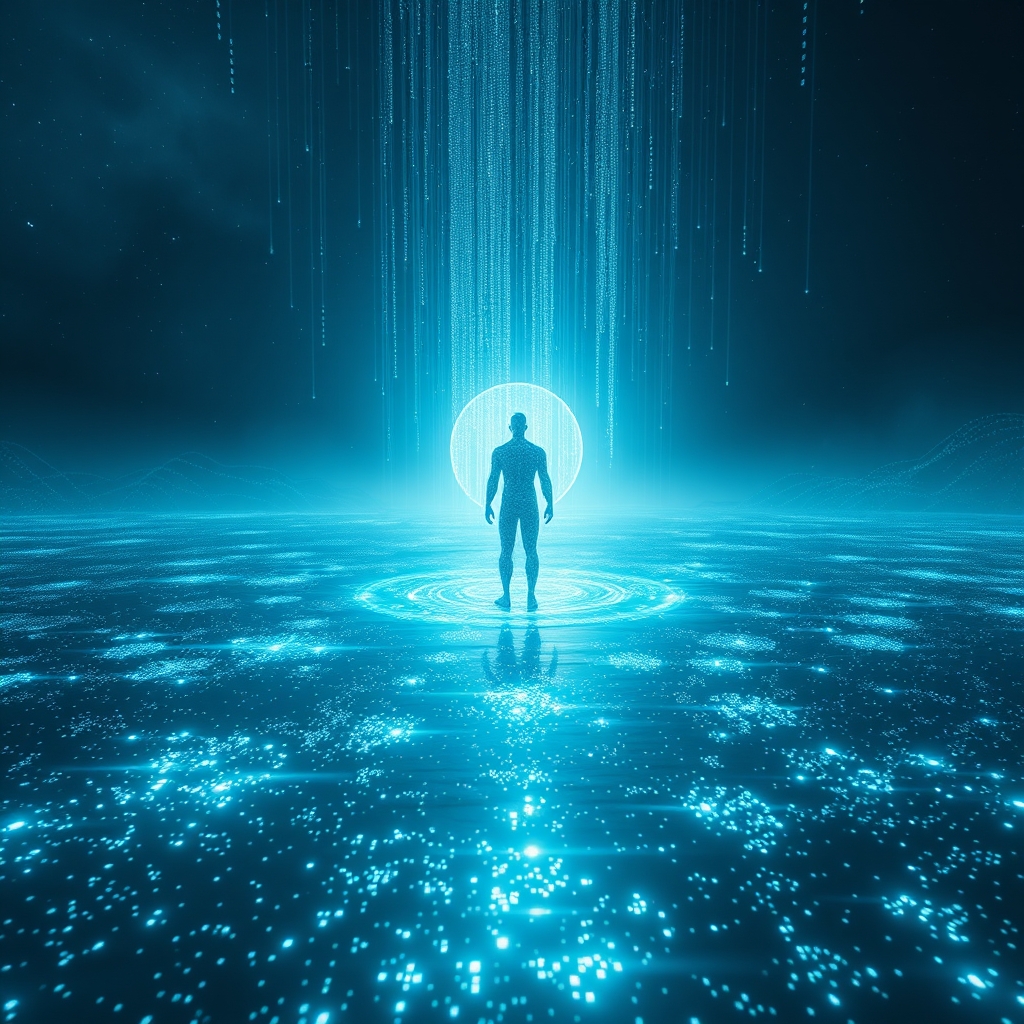
In the decade that has followed the 2020s, the convergence of quantum‑enhanced computing, ultra‑high‑resolution functional imaging, and multimodal AI has pushed the boundaries of what it means to model a human mind. By 2035, the average accuracy of predictive models for neural activity during simple tasks exceeded 90 %, and by 2045, researchers could reliably reconstruct the spatiotemporal patterns of a subject’s ongoing thoughts in real time. These advances, however, are still tied to invasive hardware and limited by the sheer complexity of long‑term synaptic plasticity. While the dream of fully non‑invasive mind‑reading is still speculative, the incremental gains have hardened the hypothesis that a digital substrate could, in principle, host the functional essence of a human mind.
Mind uploading remains a term that oscillates between scientific plausibility and philosophical speculation. The most frequently discussed pathway involves creating a comprehensive digital twin of an individual’s neural architecture—an “electronic brain” that mirrors the connectivity and dynamic activity of the biological counterpart. To achieve this, scientists would need to combine invasive neural recording with machine‑learning‑driven inference to fill in gaps, a process that could take decades for a single individual if it is even feasible. Even if the technical hurdles are overcome, questions about continuity of consciousness, personal identity, and the likelihood of subjective experience emerging in a silicon substrate remain open. Philosophers argue that a faithful functional replication might preserve a form of self, whereas others contend that subjective experience is inseparable from the biochemistry of a living brain.
Parallel to the quest for uploading is the field of radical longevity, which seeks to extend human life expectancy far beyond current limits by repairing cellular damage, eliminating senescence, and harnessing engineered organoids. Gene editing tools like CRISPR–Cas9, coupled with telomerase activation protocols, have already been shown to extend the lifespan of cultured cells. In vivo trials beginning in the early 2040s demonstrate that targeted delivery of senolytic compounds can reduce age‑related pathology in primates. By 2060, the integration of AI‑guided regenerative medicine could allow continuous monitoring of an individual’s physiological state, predicting and preventing failures before they manifest. The synergy between extended biological life and the prospect of uploading consciousness creates a future where a person might choose to transition to a digital existence while still maintaining a biological body.
The singularity—once envisioned as a distant, almost mythical event—may manifest in a more gradual, distributed fashion by 2060. Rather than a sudden, all‑encompassing takeover by superintelligent machines, we may witness the emergence of tightly coupled human–machine systems. If uploaded minds are possible, they could collaborate with AI systems that have surpassed human-level reasoning in narrow domains, forming hybrid agents capable of navigating complex social, scientific, and ethical landscapes. The tipping point, however, hinges on whether these hybrid agents can self‑improve beyond their original design parameters. While the integration of human intuition and machine speed could produce unprecedented innovation, it also opens pathways for unintended feedback loops that could destabilize existing control mechanisms.
Governance and ethics will shape the trajectory of these technologies as much as technical feasibility. Public policy in the 2030s began to grapple with the implications of extended life and cognitive enhancement, but the legal status of an uploaded consciousness remains undefined. Questions about ownership, rights, and the definition of personhood arise when an individual can exist in multiple substrates. Moreover, the risk of inequality—where only a privileged few can afford longevity treatments or upload their minds—could exacerbate social stratification. International accords, perhaps modeled after the Montreal Protocol, may be necessary to prevent a race to the bottom in safety standards.
In sum, by 2060 the world could see a patchwork of long‑lived biological humans, digitally uploaded consciousnesses, and hybrid AI‑human agents. Each pathway carries its own set of technical hurdles, philosophical quandaries, and societal risks. While the progress in neural modeling, regenerative medicine, and AI provides a plausible foundation for these scenarios, the timeline and ultimate shape of the singularity remain uncertain. The key question will not be whether the singularity will occur, but how society negotiates the profound changes that the convergence of mind uploading and radical longevity will inevitably bring.