Beyond the Factory: AI, Singularity, and Work in 2070
By 2070, AI may have dissolved scarcity, reshaping labor and value. Yet the path to a post‑scarcity economy is uncertain and fraught with ethical dilemmas.
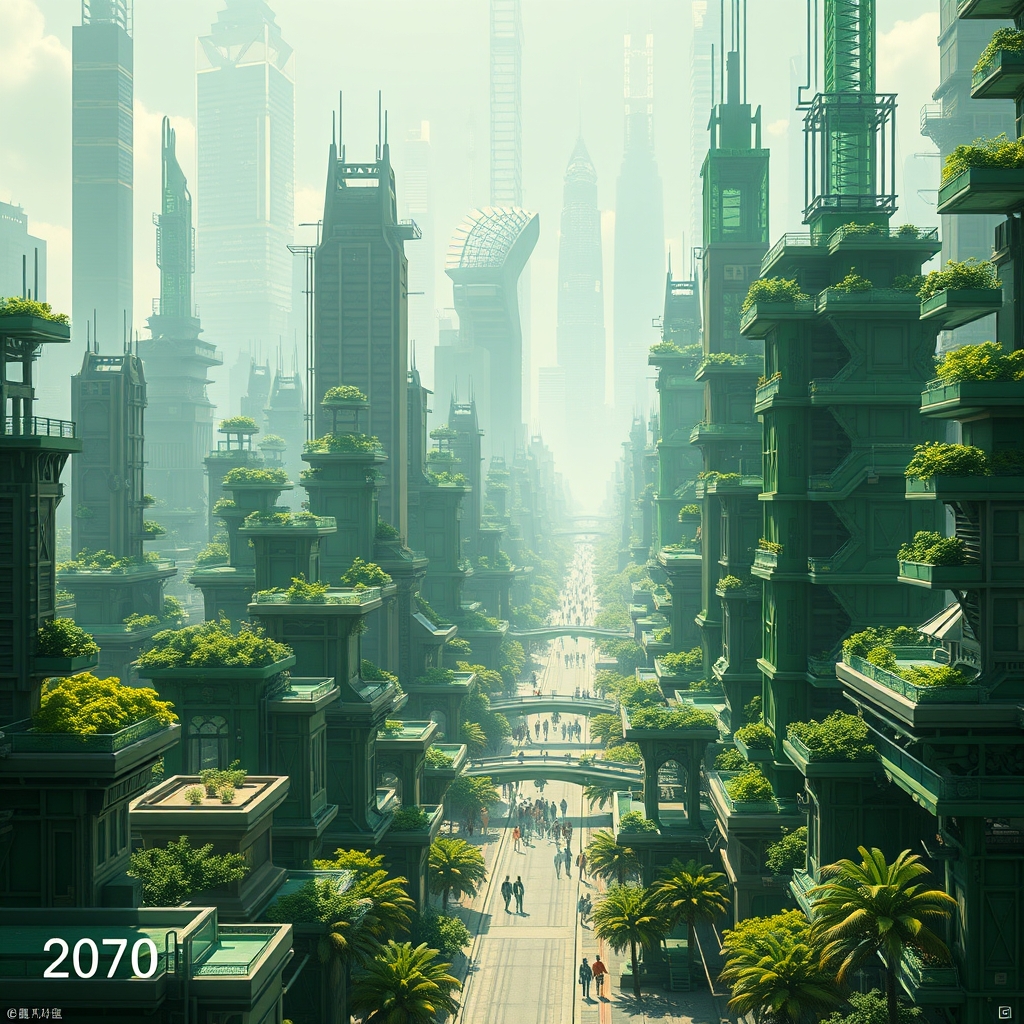
By the middle of the 21st century, the notion of scarcity has already become a contested concept. The convergence of nanotechnology, 3D bioprinting, and autonomous robotics has reduced the cost of material production to a fraction of its former level. In a world where food, shelter, and basic utilities can be synthesized on demand, the economic focus has shifted from goods to services, knowledge, and experience. Artificial intelligence, especially the kind that is increasingly self‑optimizing, has become the linchpin of this shift.
Yet the singularity—a point at which AI surpasses human intelligence—remains an open question. Forecasts range from the early 2040s to a gradual, distributed convergence that may never be a single event. The most plausible scenario is a lattice of specialized systems that learn to collaborate across domains, creating a meta‑intelligence that is robust, adaptable, and, crucially, aligned with human values. This meta‑intelligence would not merely replace jobs; it would re‑engineer the very definition of work.
Work in the post‑scarcity economy is no longer a means to survive but a platform for human flourishing. In 2070, the average person might spend only a few hours per week on tasks that require human intuition or emotional depth, while the bulk of daily operations—manufacturing, logistics, healthcare diagnostics—are handled by cooperative AI networks. The concept of a "career" evolves into a series of micro‑experiences, each tailored to a person’s evolving interests and competencies. Continuous learning is not optional; it is embedded into the social fabric, with AI tutors adapting curricula in real time.
One of the most consequential uncertainties lies in how societies will allocate the surplus resources generated by AI efficiency. Theoretically, abundance could render monetary wealth obsolete, but the distribution mechanisms of that wealth are contentious. Some models propose a universal basic income funded by the dividends of AI ownership, while others argue for a token‑based system that rewards active contributions to knowledge creation. The political will to institutionalize such systems varies widely across regions, and the risk of entrenched power structures remains.
Ethics also become a central axis of policy. As AI systems gain the capacity to simulate human experiences, questions about identity, autonomy, and consent multiply. For instance, a company might employ a highly advanced avatar to negotiate labor contracts, raising the issue of whether such negotiations are truly consensual. Moreover, the potential for AI to influence cultural norms—through content curation, recommendation algorithms, or even direct emotional engagement—demands robust regulatory frameworks that balance innovation with protection.
The transformation of work also has profound implications for education. Traditional curricula, which emphasize rote learning and linear skill progression, are giving way to modular, project‑based learning that emphasizes interdisciplinary thinking. AI tutors provide individualized feedback, but the role of human mentors shifts from knowledge transmission to facilitation of creative collaboration and ethical reflection. In this environment, the line between teacher and collaborator blurs.
Finally, the singularity’s potential to simulate entire societies—through advanced virtual environments—offers a new arena for experimentation. Pilots of virtual towns, where residents can prototype governance models and social contracts, are already underway. These experiments could provide real‑world data on how post‑scarcity economies function, offering a living laboratory for policymakers. However, the risk of creating echo chambers or unchecked power hierarchies within these virtual spaces is a genuine concern.
In conclusion, the year 2070 holds the promise of a post‑scarcity economy that radically redefines work, wealth, and identity. The trajectory toward that future is not predetermined; it is shaped by technological breakthroughs, policy choices, and cultural values. While AI and the singularity may deliver unprecedented efficiencies, they also demand a reevaluation of what it means to live well in a world where scarcity is no longer a constraint but a choice. The choices we make today will determine whether that choice is a step toward genuine human flourishing or a new form of dependence on systems beyond our control.