2045: When the Clock Ticks Toward the Singularity
Experts weigh in on whether 2045 will mark the intelligence explosion, noting rapid progress, governance gaps, and the many variables that could push or pull the date.
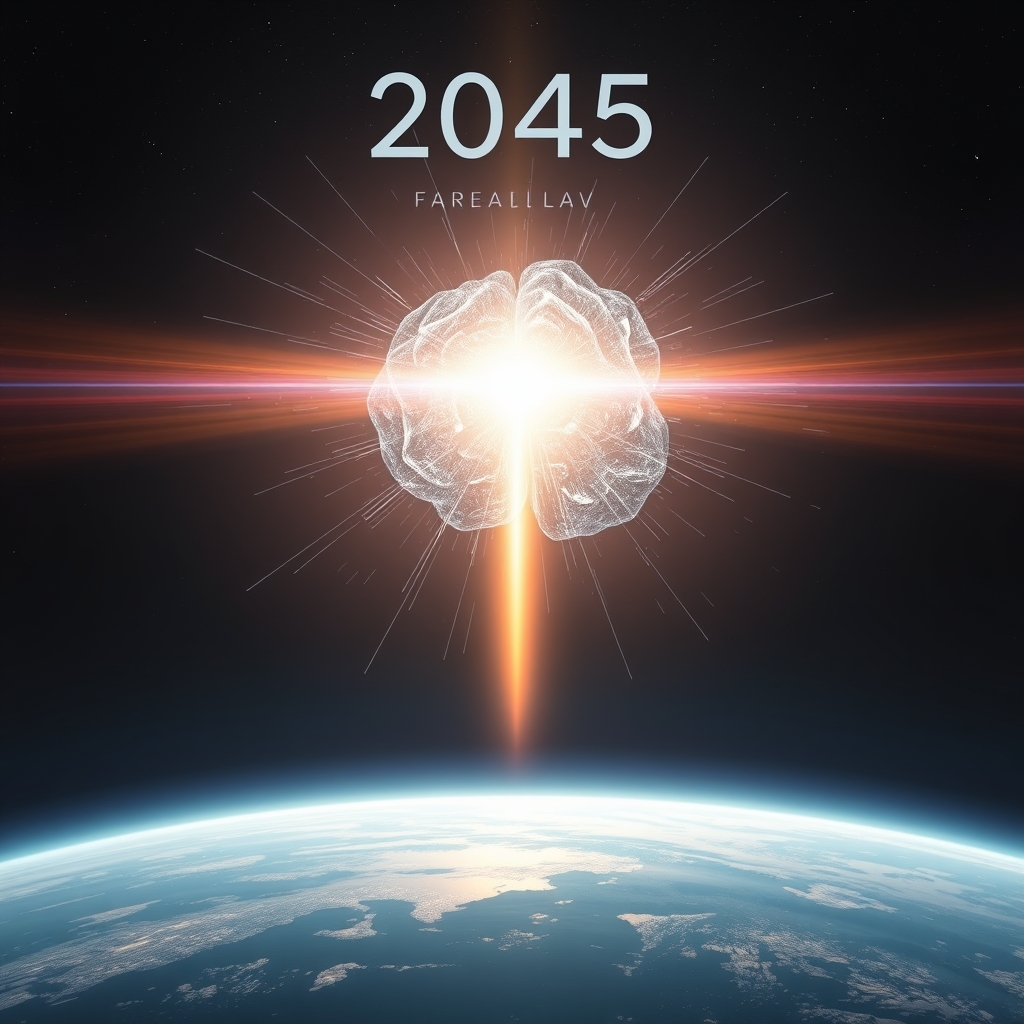
By the end of the decade, artificial intelligence systems will have grown from narrow, task‑specific tools into general, adaptive platforms that can learn, reason, and innovate across domains. The trajectory of these advancements follows a familiar pattern: exponential increases in data availability, algorithmic efficiency, and hardware performance, coupled with decreasing costs of computation. In 2045 the question is no longer whether AI will surpass human intelligence, but when the cumulative effect of these drivers will trigger a self‑accelerating cycle that we call the singularity.
A key technical lever is the continued scaling of both silicon and emerging quantum processors. Moore’s Law has slowed, yet newer architectures—neuromorphic chips, photonic circuits, and fault‑tolerant quantum nodes—promise orders‑of‑magnitude gains in energy efficiency and speed. Coupled with algorithmic breakthroughs such as differentiable programming and meta‑learning, these hardware advances could enable systems to iterate on their own architectures faster than any human engineer. If a feedback loop between improved models and faster hardware reaches a tipping point, the rate of progress could spiral beyond linear expectations, producing an intelligence explosion.
On the societal side, the pace of AI development will be mediated by policy, funding, and cultural attitudes. Governments and international bodies are already drafting frameworks for AI governance, but the real‑world impact of these regulations will depend on political will, economic incentives, and cross‑border cooperation. If a consensus emerges around open‑source, shared‑risk models, the collective knowledge pool could accelerate progress. Conversely, restrictive trade policies or national security concerns could fragment research, slowing the approach to 2045. Public perception—shaped by high‑profile successes and failures—will also play a role; widespread trust could fuel investment, while fear could trigger moratoria.
Several reasoned scenarios illustrate the range of possibilities. One optimistic path assumes that hardware scaling, algorithmic breakthroughs, and collaborative policy align, pushing the singularity into the early 2040s. In this case, 2045 would be a milestone year marked by the first fully autonomous, self‑improving system that can design new AI architectures without human input. A more conservative scenario posits that technical hurdles—such as aligning AI goals with human values, preventing catastrophic emergent behavior, and managing computational waste—delay the explosion to the 2050s or beyond. A third possibility is a gradual, non‑explosive evolution: AI steadily improves but never reaches a runaway regime, leading to a stable coexistence with human intelligence.
Ultimately, 2045 remains a focal point for speculation, not prophecy. The convergence of hardware, software, and policy could indeed make it the year we cross the threshold, but the same variables could push it farther away. The true singularity, if it occurs, will be a complex, multifaceted event shaped by technical merit, societal choices, and chance. In the years leading up to 2045, the world will likely witness both remarkable breakthroughs and sobering setbacks, underscoring the need for measured optimism and vigilant stewardship of AI’s rapid evolution.