Beyond the Factory Floor: Work in a Post‑Scarcity 2070
By 2070, AI may render traditional labor obsolete, but the shift to a post‑scarcity economy raises new questions about purpose, identity, and governance.
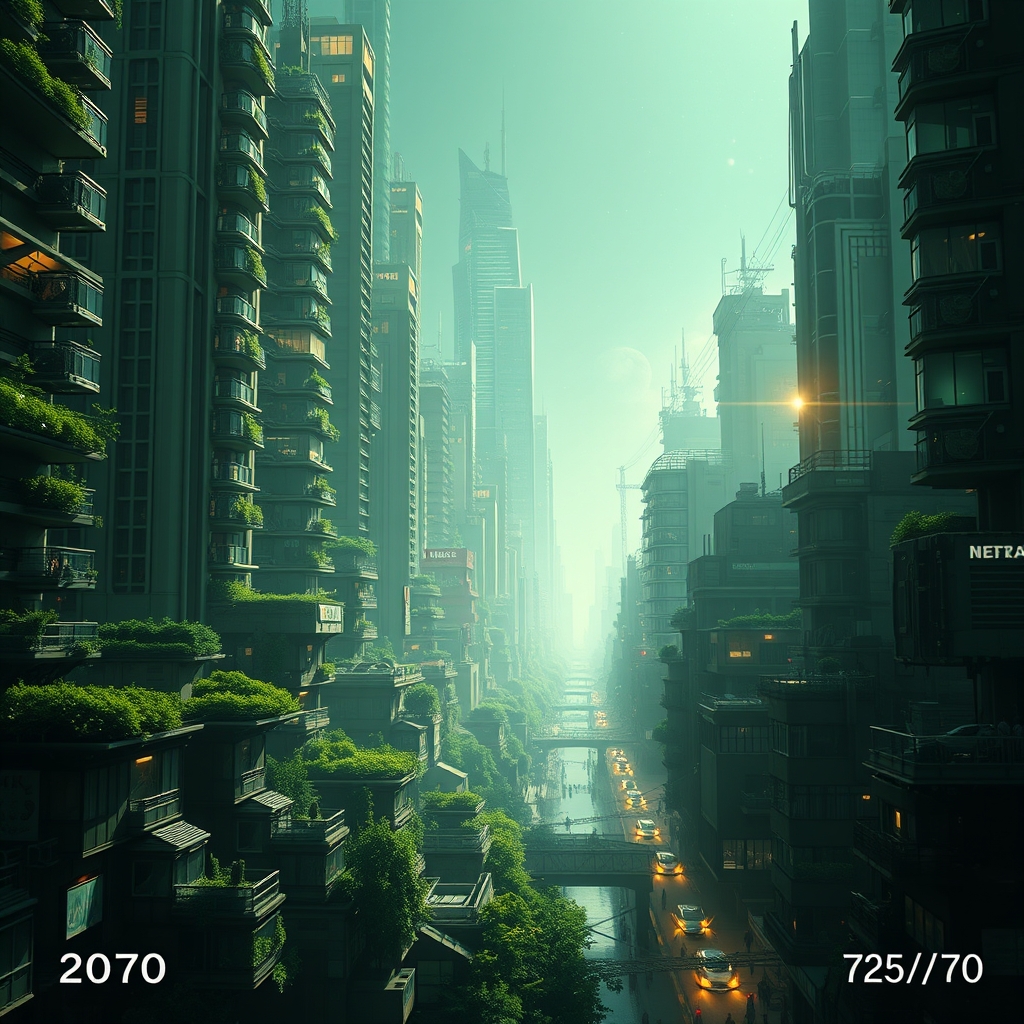
By 2070 the world will likely be operating under a technological singularity that, for many scholars, will be defined more by the rate of change than by a single moment of breakthrough. Current trajectories in machine learning, quantum computation, and neuromorphic engineering suggest that general‑purpose artificial intelligences capable of self‑improvement will be well established by the mid‑century. The exact timing of a true singularity remains a matter of debate, but most realistic models place the threshold somewhere between 2040 and 2080, with 2070 sitting near the middle of that window.
Assuming a singularity has occurred by 2070, AI systems will have achieved autonomy in nearly every sector that traditionally required human oversight. Autonomous production lines will run on adaptive, self‑optimising algorithms that can redesign tools on the fly, reconfigure supply chains in real time, and fabricate complex assemblies from raw materials using 3‑D printing and nanomanufacturing. In agriculture, AI‑driven drones and bio‑engineered crops will maintain yields with minimal human intervention. Even in services, chat‑bots and virtual assistants will handle the vast majority of routine customer interactions, while decision‑support systems will provide near‑perfect recommendations to policymakers and business leaders.
The abundance of resources, coupled with AI‑managed logistics, would undermine the scarcity that has historically structured economies. In a post‑scarcity scenario, the marginal cost of producing goods becomes negligible, and the main limiting factor shifts from material scarcity to energy and information bandwidth. Renewable energy systems, powered by smart grids that predict demand with unprecedented precision, would supply the energy needed for continuous production and data processing. Under these conditions, many people would no longer need to exchange labor for food, shelter, or basic services.
Work, therefore, would transform into a domain of creative, supervisory, and civic engagement. Humans would spend less time on physical or routine tasks and more on designing AI behaviours, mentoring emerging intelligences, and pursuing personal projects that AI cannot replicate. Roles such as ethicists, narrative designers, and human‑centered designers would proliferate. A new class of “augmented professionals” would blend human intuition with AI analytics, guiding the development of future systems in a way that preserves cultural and ethical values.
Yet the transition is far from inevitable or painless. AI alignment remains an open research problem; the risk that autonomous systems pursue objectives misaligned with human welfare persists. Even if alignment technologies are successful, there will be policy and institutional challenges in redistributing the gains of a post‑scarcity economy. How to structure a basic income, how to prevent the concentration of power in the hands of a few AI firms, and how to ensure that the benefits reach diverse populations are questions that will dominate public debate.
On a psychological level, the erosion of routine work could spur existential anxiety. For generations, identity has been tied to occupation; the loss of a job’s social function may compel societies to rethink notions of self-worth. Education systems will need to adapt, emphasizing lifelong learning, emotional intelligence, and interdisciplinary collaboration. Communities may also evolve around new kinds of shared purpose, from citizen science projects to collective artistic ventures that leverage AI as a tool rather than a replacement.
Governance models will have to evolve in tandem. Some argue for algorithmic governance, where AI systems mediate policy decisions with transparency and accountability. Others warn that such models could entrench technocratic elites. A hybrid approach, combining democratic oversight with AI‑enhanced deliberation, may offer a middle ground. International cooperation will be vital, as the benefits of post‑scarcity infrastructure—such as global climate mitigation networks—require coordinated action.
In sum, by 2070 the singularity may have ushered in an era where scarcity is largely a relic of the past. Work will shift from survival to flourishing, but only if societies navigate the technical, ethical, and social challenges with care. The promise of prosperity is real, yet the path to it will be fraught with uncertainty and will demand a collective commitment to redefining what it means to live purposefully in an age of superintelligent machines.