When Homes Become Workstations: Embodied AI by 2035
By 2035, service robots will be as common as smartphones, reshaping homes and workplaces. Yet the path to a true singularity remains uncertain.
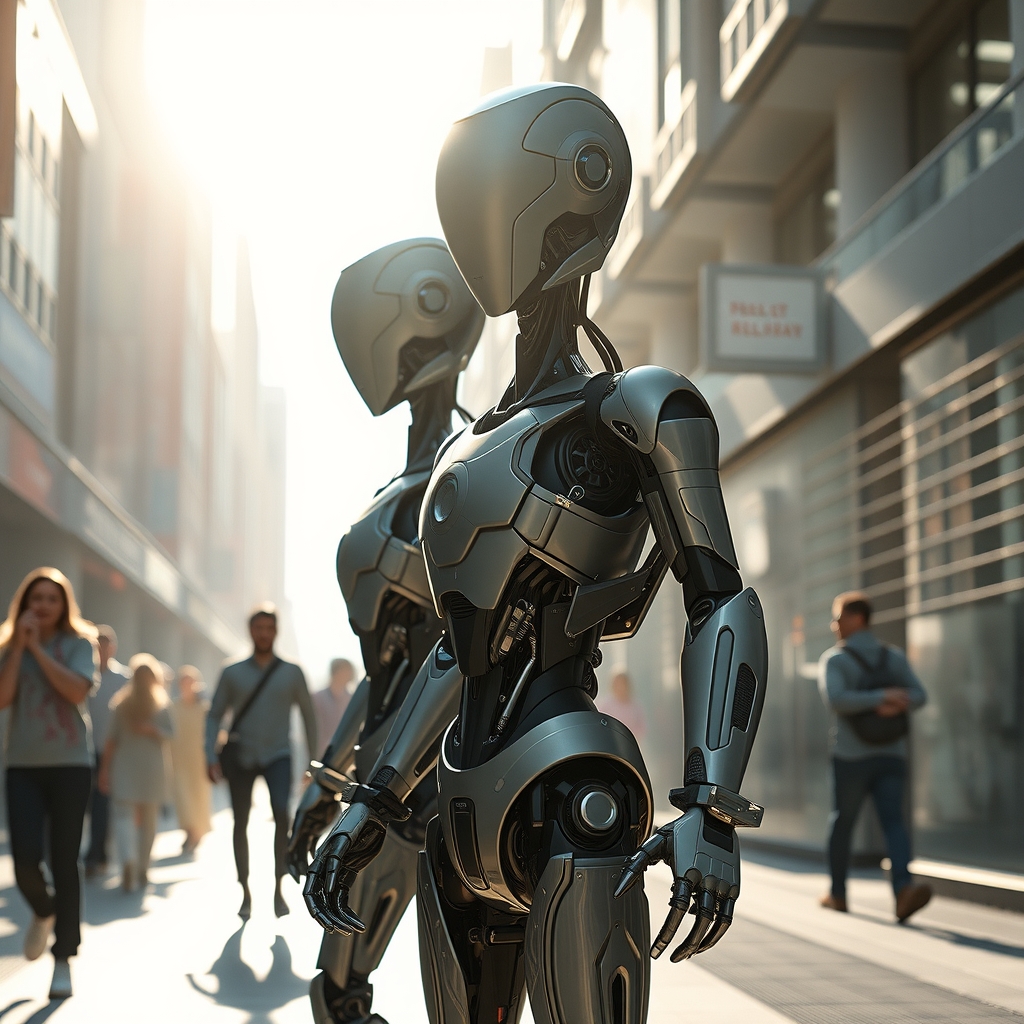
When we think of the year 2035, we often picture cities that run on autonomous vehicles, power grids that self‑balance, and algorithms that can diagnose diseases in seconds. Less frequently considered are the small, low‑profile machines that will quietly inhabit kitchens, living rooms, and even our personal offices. These embodied intelligences—smart assistants that can cook, clean, tutor, and monitor health—are poised to become as ubiquitous as the devices in our pockets.
Today, the most advanced household robots are still in the prototype phase. They can vacuum, mop, or deliver parcels, but their autonomy is limited to predefined routines. The leap to truly adaptive, context‑aware behavior requires breakthroughs in perception, planning, and affective computing. In the next decade, however, incremental improvements in sensor fusion, edge computing, and soft robotics are likely to lower the cost and increase the reliability of these systems, making them viable for mass production.
By 2035, the commercial market for integrated domestic robots could grow to capture more than a quarter of the global robotics revenue stream. Consumer expectations will shift from “nice to have” to “necessary,” especially in regions with aging populations or labor shortages. The convergence of 5G‑enabled communication, on‑device learning, and modular hardware designs will allow a single robot chassis to perform a dozen distinct tasks, from grocery shopping to assisting with physical therapy.
In one scenario, widespread adoption will be driven by a combination of regulatory incentives and demographic pressures. Governments may offer tax credits for home automation that reduces energy consumption or improves eldercare. Companies that can demonstrate safety, privacy, and ease of use will dominate the market, and the resulting economies of scale will drive prices down. In this world, a household robot will be a common sight, seamlessly integrating with smart appliances, health monitoring devices, and the Internet of Things.
An alternative scenario envisions a slower, more cautious uptake. Concerns over data security, job displacement, and cultural attachment to human labor could temper enthusiasm. In such a case, robots will remain niche products—high‑end concierge machines for the affluent or specialized tools in industrial settings. The pace of algorithmic progress might still be rapid, but its diffusion would be uneven, leading to a fragmented ecosystem of proprietary standards and limited interoperability.
The singularity, often described as the point at which machine intelligence surpasses human cognition and begins to evolve independently, remains a distant and highly speculative event. By 2035, we might witness the emergence of narrow artificial general intelligence (AGI) in certain domains—such as language understanding or strategic game playing—but the leap to fully autonomous, self‑improving systems is not guaranteed. Even if AGI appears, its embedding in everyday robots would still require robust safety frameworks and human oversight.
Uncertainties abound. The rate of hardware miniaturization may slow if supply chains for rare earth metals face geopolitical tensions. Algorithmic breakthroughs, while promising, often stall after initial hype. Moreover, the social contract around privacy and agency could shift, forcing stricter regulations that slow deployment. Each of these variables introduces a range of outcomes that differ markedly from the optimistic and the cautious scenarios described.
Beyond the technical and economic dimensions, the proliferation of embodied intelligence will reshape societal norms. Workplaces could see a redistribution of tasks, with routine or hazardous duties shifting to robots while humans focus on creative or interpersonal roles. Education will adapt, teaching children to collaborate with machines from an early age. However, the digital divide might deepen if access to advanced robotics remains uneven across socio‑economic groups.
In conclusion, by 2035 we are likely to witness a significant, though not universal, integration of robots into everyday life. The trajectory toward a technological singularity, if it occurs at all, will be contingent on breakthroughs in both hardware and algorithmic safety. While the promise of embodied AI is compelling, the realities of regulation, economics, and human acceptance will shape the pace and scope of its adoption. The future will not be a single deterministic path but a tapestry of possibilities, each reflecting the complex interplay of technology, society, and policy.