When Minds Merge: 2040 and the Dawn of Shared Cognition
By 2040 brain‑computer interfaces may link human and AI minds, creating a new form of collective intelligence—yet the path to a singularity remains uncertain.
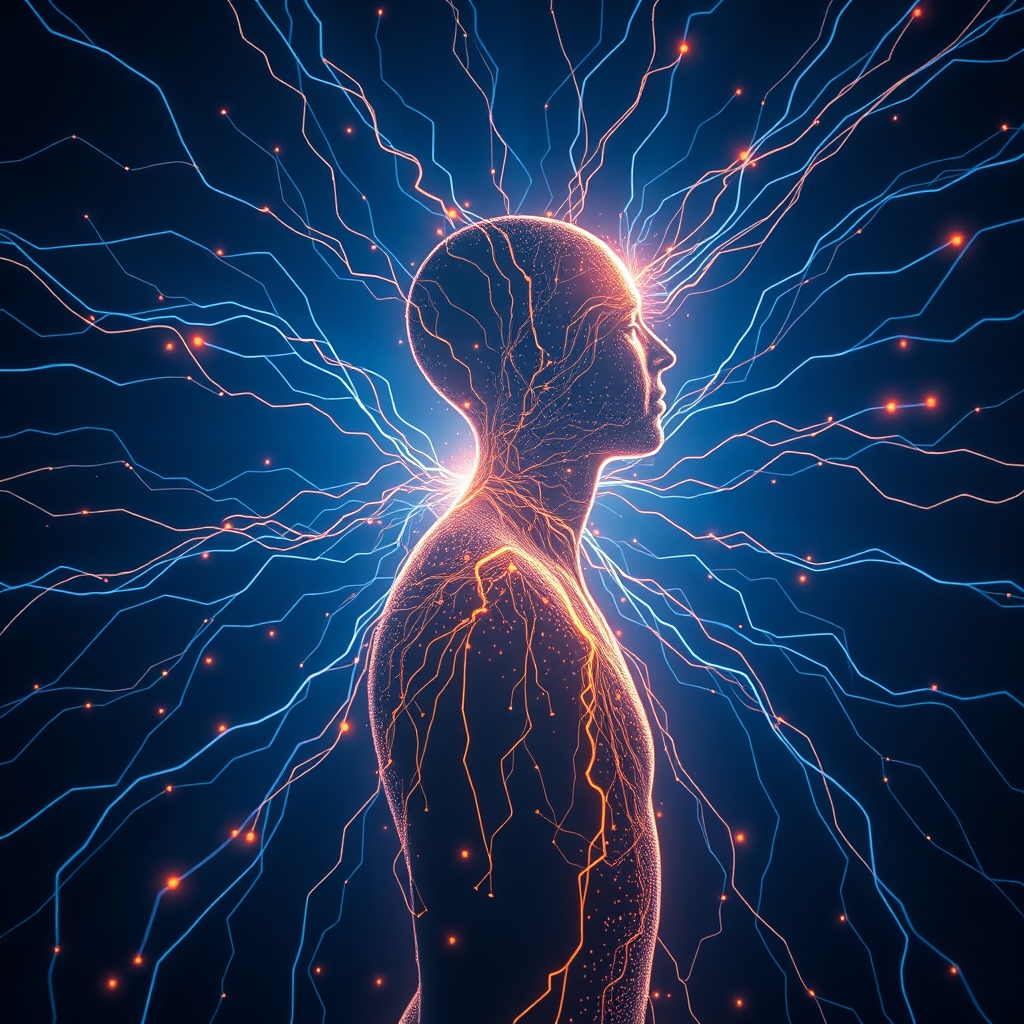
The last decade has seen brain‑computer interfaces (BCIs) evolve from laboratory curiosities to commercial products capable of restoring speech to paralyzed patients and enabling rudimentary control of prosthetic limbs. By 2040, the most ambitious projects are moving beyond simple command and response toward a bidirectional, high‑bandwidth dialogue that could, in theory, merge human and artificial cognition.
At the heart of this shift lies a confluence of advances in neural recording, machine learning, and neuromorphic hardware. Non‑invasive electroencephalography (EEG) has been supplanted in many contexts by highly miniaturized, implantable arrays that achieve single‑neuron resolution without the need for open‑brain surgery. Coupled with real‑time decoding algorithms that can translate spiking patterns into actionable vectors, these devices promise a fidelity that was unimaginable a decade ago. On the AI side, transformer‑based models have grown more efficient through sparsity and neuromorphic accelerators, allowing them to run on the edge with minimal latency.
When these technical strands intersect, the concept of shared cognition emerges. Rather than a human controlling an AI agent, the two systems would exchange streams of information, augmenting each other’s strengths. A human might feed contextual nuance and ethical judgment into an AI’s inference engine, while the AI supplies pattern recognition and predictive analysis that the human mind alone could not synthesize quickly enough. Early prototypes of such hybrid architectures are already being tested in closed‑loop systems that adapt to a user’s emotional state, suggesting that shared cognition could be more than a theoretical construct.
The potential benefits are compelling. In medicine, a shared neural‑AI interface could allow surgeons to tap into AI‑generated 3D reconstructions of a patient’s anatomy in real time, improving precision while the surgeon’s own visual cortex receives augmented reality cues. In education, students might access curated knowledge streams that adapt instantly to their cognitive load, effectively turning the classroom into a collaborative neural network. Beyond individual use, large‑scale deployments of BCI‑AI systems could enable collective problem‑solving on a scale that mirrors the emergent intelligence of social insects, but with human values explicitly encoded.
However, the promise is matched by profound risks. The very intimacy of a shared neural interface raises questions about privacy, agency, and identity. If an AI can read and write to a person’s neural patterns, how do we delineate the boundary between user and machine? The possibility of malicious manipulation—whether through hacking of the neural hardware or through subtle algorithmic biases—suggests that robust encryption and transparent governance will be essential. Moreover, the psychological impact of constant cognitive augmentation remains largely uncharted; chronic dependence on AI assistance could alter baseline neural plasticity, potentially eroding certain skills over time.
Regulatory frameworks are struggling to keep pace. Current medical device approvals are designed for discrete, one‑to‑one interactions between a human and a machine, not for systems that form a continuous feedback loop with an adaptive AI core. By 2040, we may see the emergence of new regulatory bodies dedicated to neuro‑AI safety, but international coordination will be difficult, especially as commercial interests push for rapid deployment in markets with differing standards.
Singularity predictions for 2040 therefore rest on a delicate balance of optimism and caution. One scenario envisions a smooth transition where shared cognition merely extends human capabilities, allowing societies to tackle complex problems—climate modeling, disease eradication, and interplanetary navigation—at unprecedented speed. In this view, the singularity is not a single, explosive event but a gradual layering of cognitive layers that humans and AI co‑evolve.
A more cautionary scenario acknowledges the technical and ethical hurdles that could stall or even reverse progress. If large‑scale deployments fail to meet safety thresholds, public backlash could trigger stringent restrictions, confining BCIs to niche therapeutic applications. Alternatively, the emergence of disinformation campaigns that exploit neural interfaces could erode trust in the technology, delaying the benefits of shared cognition.
The truth likely lies somewhere in between. The next decade will probably be marked by iterative experiments, small‑scale pilots, and a growing body of empirical data on the long‑term effects of neural augmentation. Researchers will need to refine models of neural plasticity that can predict how continuous AI interaction reshapes cognition. At the same time, interdisciplinary panels will have to craft policies that balance innovation with protection, ensuring that shared cognition serves societal well‑being rather than narrow interests.
In essence, 2040 will not be a single watershed moment but a series of milestones that collectively determine whether the line between human and artificial intelligence blurs into a new, shared form of cognition. The singularity, if it materialises, will likely be the result of sustained, responsible progress rather than a sudden, uncontrollable leap. Our best preparation is to invest in rigorous science, transparent governance, and public dialogue that keeps the human element—values, rights, and agency—at the centre of this unfolding partnership.