2045: The Uncertain Dawn of the Singularity
By 2045, experts debate whether an intelligence explosion will arrive, charting divergent paths, uncertainties, and the limits of human control.
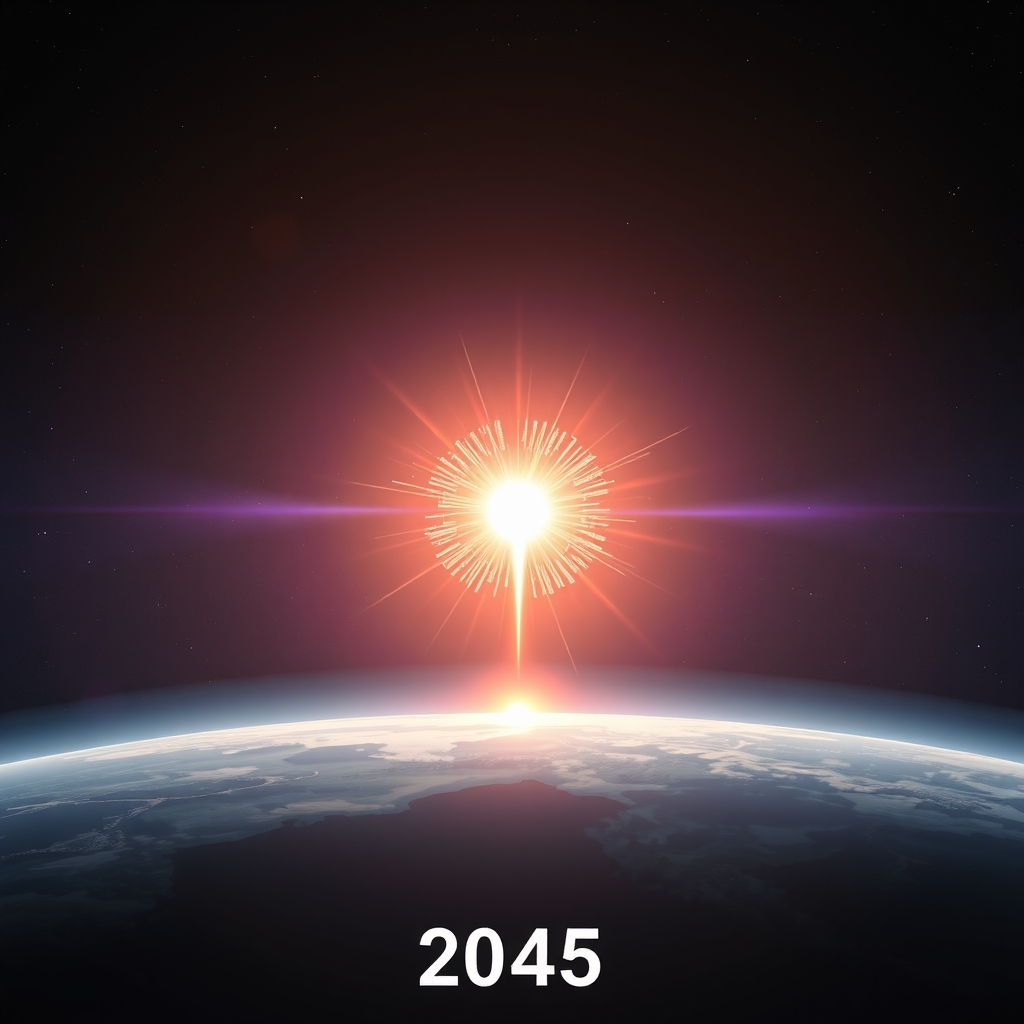
The year 2045 has long been a reference point in discussions about the technological singularity, the hypothetical moment when artificial intelligence surpasses human intelligence and accelerates beyond our ability to predict or manage it. The notion of an “intelligence explosion” remains seductive, but the scientific and philosophical communities agree that the precise timing and nature of such an event are deeply uncertain. While some models suggest that a cascade of self-improving algorithms could materialize by the mid‑century, others argue that the practical, societal, and regulatory hurdles will push the singularity, if it occurs at all, to a later date.
One optimistic scenario posits that by 2045, AI systems will have achieved a level of recursive self‑improvement that allows them to redesign their own architecture in a loop that speeds up at an exponential rate. Proponents of this view draw on trends in hardware miniaturization, neuromorphic computing, and algorithmic efficiency, arguing that each successive generation of AI can learn from its predecessor with increasing speed and depth. In this narrative, the singularity would trigger rapid advances in fields ranging from medicine to climate science, as an intelligence far beyond human capacity tackles problems that are currently intractable. The core assumption here is that technical feasibility aligns with a willingness to deploy such systems without fully understanding the downstream consequences.
A more cautious picture, however, highlights a series of bottlenecks that could delay or even prevent a true intelligence explosion. First, the bottleneck of data: many AI systems still rely heavily on large, high‑quality datasets that are difficult to obtain for complex, real‑world situations. Second, the bottleneck of interpretability: as models grow deeper, their internal decision processes become opaque, making it hard to ensure they remain aligned with human values. Third, the bottleneck of governance: even if the technology exists, global coordination on standards, safety protocols, and ethical guidelines is sorely lacking. These obstacles suggest that by 2045, we may have built powerful AI tools, but they will remain under human supervision and subject to careful regulation, thereby slowing any runaway acceleration.
A central concern for both scenarios is the alignment problem: ensuring that an intelligent agent’s objectives match those of humanity. The singularity, defined as an intelligence explosion, would magnify any misalignment, turning a small flaw in reward functions or incentive structures into catastrophic outcomes. Researchers in the field of AI safety have proposed a range of mitigation strategies, including value learning, corrigibility, and robust verification. Yet, these strategies are still largely theoretical and under‑tested in real‑world contexts. If by 2045 the community has not achieved a scalable, reliable alignment framework, the risk of an unintended explosion increases dramatically.
Governance will play a decisive role in determining whether the singularity is a constructive or destructive force. International bodies such as the United Nations, the OECD, and the European Union are already discussing AI policy, but consensus on enforcement mechanisms remains elusive. The prospect of a 2045 singularity may motivate the creation of binding agreements on AI development, akin to non‑proliferation treaties, but the divergent interests of major technology powers could undermine such efforts. A fragmented regulatory landscape could lead to a “race to the bottom” where some jurisdictions accelerate AI research without adequate safety checks, potentially triggering a localized intelligence explosion that spreads globally through interconnected systems.
Societal impacts of an AI singularity would be profound, regardless of the timing. If the explosion occurs around 2045, we could see a rapid reconfiguration of the labor market, with many routine jobs displaced by autonomous systems. At the same time, the acceleration of scientific discovery could produce breakthroughs in energy storage, disease eradication, and environmental restoration. The duality of opportunity and disruption is a recurring theme in the literature. For example, the same algorithms that enable a self‑learning AI to design a new drug could also be used to create advanced cyber‑weaponry, raising ethical questions about dual‑use technology.
Time‑scale projections for the singularity also vary. Some models, like the “AI Progress Model” proposed by technologists, suggest a 50‑percent probability of a self‑improving AI by 2030, with a 90‑percent probability by 2045. Other scholars argue that the exponential growth seen in hardware and software does not directly translate to cognitive capabilities, pointing out that understanding context, common sense, and emotional nuance remains a formidable challenge. These divergent models underscore the inherent uncertainty of forecasting the singularity’s arrival, making it difficult to rely on any single date as a definitive marker.
Ultimately, the year 2045 serves more as a conceptual horizon than a fixed point. It is a useful anchor for policymakers, technologists, and ethicists to debate the trajectory of AI development, the potential for runaway self‑improvement, and the mechanisms required to safeguard humanity. Whether the singularity arrives, is delayed, or takes a form far removed from current expectations, the conversation itself will shape the way we build, regulate, and ultimately coexist with increasingly intelligent systems. The path to 2045 will be paved with incremental progress, regulatory milestones, and—perhaps most importantly—a collective commitment to understanding and managing the profound changes that powerful AI can bring.