Mind Uploads and the Long-Term Horizon of AI
By 2060, mind uploading and radical longevity may have reshaped human–machine integration, yet the journey to a true singularity remains uncertain.
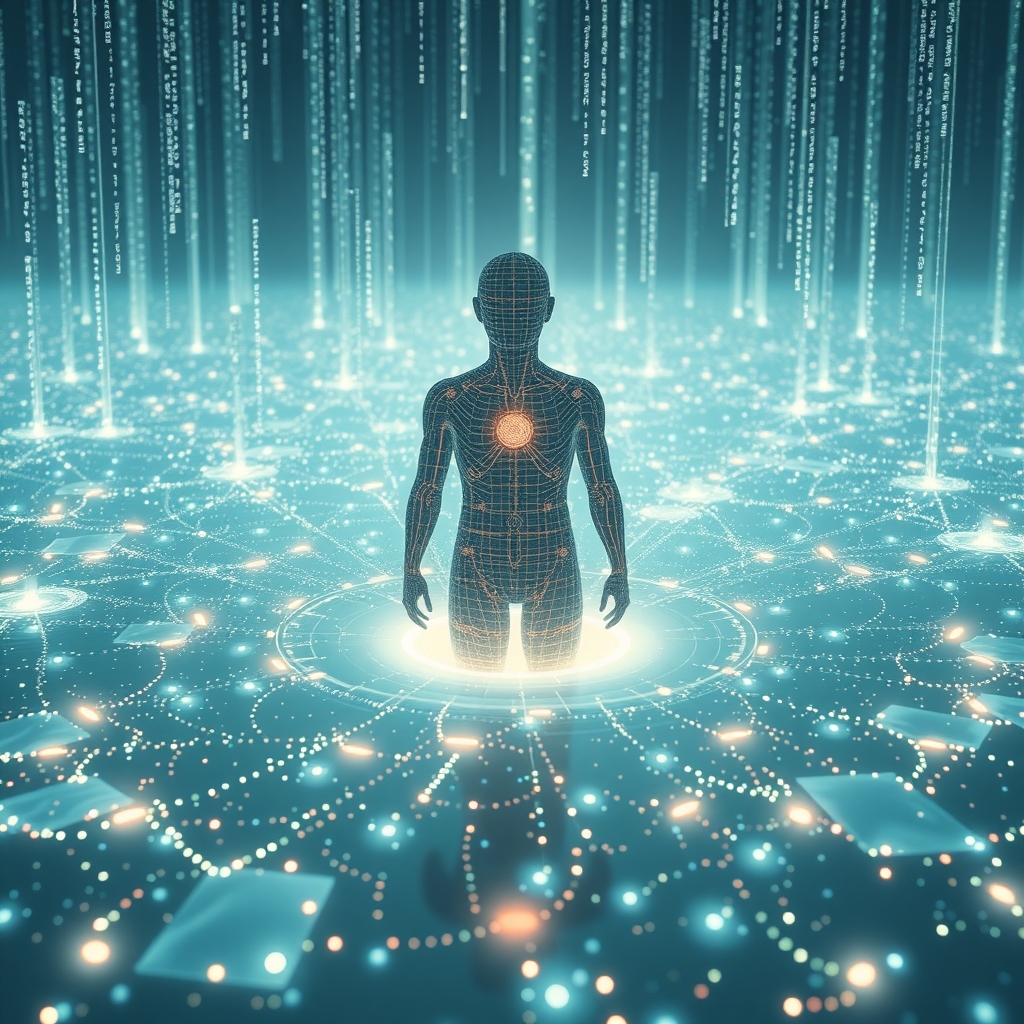
The conversation around the technological singularity has persisted for decades, but the tangible steps toward it have become more concrete as 2060 approaches. In the early twenty‑first century, advances in deep learning, quantum computing, and neuromorphic chips laid a foundation that now supports the most ambitious projects in artificial intelligence and human enhancement. Today, the focus is shifting from narrow AI to the broader question of whether human minds can be transferred into digital substrates, and whether such a transfer could be paired with radical life extension to produce new forms of conscious existence.
Mind uploading—sometimes called whole‑brain emulation—is not a sudden breakthrough but a cumulative series of successes in mapping neural circuitry and replicating synaptic dynamics. High‑resolution imaging techniques such as expanded electron microscopy and advanced diffusion tensor imaging have begun to produce detailed maps of small cortical columns. Coupled with large‑scale simulations that exploit distributed quantum‑classical hybrid processors, researchers can now test whether a computational model can reproduce the activity of a small, well‑defined neural network. The leap from these localized models to an entire human brain remains a formidable barrier: the sheer number of neurons (roughly 86 billion) and the complexity of their interconnections require storage and processing capacities that are still orders of magnitude beyond current or near‑term technology.
Radical longevity, the promise of drastically extending healthy human lifespan, is advancing on two parallel fronts. Biologically, gene‑editing tools like CRISPR and base editors are being used to repair age‑related DNA damage and suppress senescence pathways. Meanwhile, synthetic biology is creating engineered tissues that can replace failing organs, and nanomedicine offers the possibility of intracellular maintenance that could prevent degenerative disease. On the cybernetic side, prosthetic and exoskeletal technologies are achieving near‑human performance, and neuro‑prosthetic interfaces are already capable of restoring motor function to paralyzed individuals. When these biological and mechanical ecosystems converge, the idea of a hybrid organism—part living tissue, part engineered module—becomes increasingly plausible.
The intersection of mind uploading and radical longevity presents a compelling, if speculative, future. Imagine an individual who, after years of incremental cognitive enhancement via neuro‑prosthetics, chooses to digitize their consciousness into a robust, fault‑tolerant architecture. This digital mind could then inhabit a bio‑engineered body or a fully synthetic avatar, effectively decoupling subjective experience from the aging biochemical substrate. Such a system would theoretically allow for continuous renewal: when a physical component fails, it could be replaced without loss of identity, and the consciousness itself could be backed up or scaled across multiple nodes for parallel processing.
The singularity—defined as a point at which artificial intelligence surpasses human intelligence and self‑improves beyond our control—might find a new context in 2060. If mind uploading becomes viable, the uploaded consciousness could itself accelerate the refinement of its underlying architecture. Moreover, the integration of human‑like decision‑making with machine‑level optimization could lead to hybrid agents that combine intuition with brute computational power. However, whether such agents would reach the threshold of true singularity depends on several uncertain factors: the fidelity of the emulation, the ability to preserve emergent properties of consciousness, and the scalability of the underlying hardware.
Ethical, legal, and societal uncertainties loom large. First, the question of identity: if a mind is copied, is the copy the same person, or merely a replica? Legal systems will need to decide whether digital consciousnesses have rights, and if so, how those rights interact with the original biological body. Second, governance of radical longevity: will extended lifespans be a public good or a privilege for the wealthy? Third, safety protocols for self‑improving AI become more urgent when human minds are directly embedded in the loop; a runaway feedback cycle could jeopardize both digital and biological entities.
One plausible scenario is a cautious, heavily regulated path. Governments and international bodies could establish strict safety standards for brain‑computer interfaces and longevity treatments. Public funding might focus on incremental improvements, ensuring that each step is vetted for long‑term effects. In this scenario, mind uploading would remain experimental, and radical longevity would be available only through controlled clinical trials. The singularity, if it occurs, would do so gradually, with clear checkpoints and oversight.
An alternate trajectory involves accelerated development driven by private enterprise and a decentralized research ecosystem. Here, the race to upload minds could outpace regulatory frameworks, leading to a patchwork of untested technologies. Radical longevity might become a commodity, accessible to those who can afford nanomedicines and bio‑engineered organs. In such a world, the singularity might arrive abruptly, as self‑improving systems integrate with human minds without sufficient safeguards, potentially destabilizing existing social structures.
Regardless of the path, the interplay between mind uploading and radical longevity is likely to reshape what it means to be human. The prospect of a digital consciousness living within a biologically or mechanically sustained body challenges our assumptions about mortality, identity, and agency. Even if the singularity remains an elusive horizon, the technological and philosophical questions it raises will demand careful deliberation. By 2060, we may not have reached the tipping point, but the groundwork laid in the coming decade will determine whether the future is a single, unified intelligence or a mosaic of hybrid beings navigating an ever‑evolving landscape.