Beyond the Singularity: 2080 and the Cosmic Posthuman Age
In 2080 humanity may have crossed the singularity threshold, but the path toward a cosmic posthuman civilization is riddled with uncertainty.
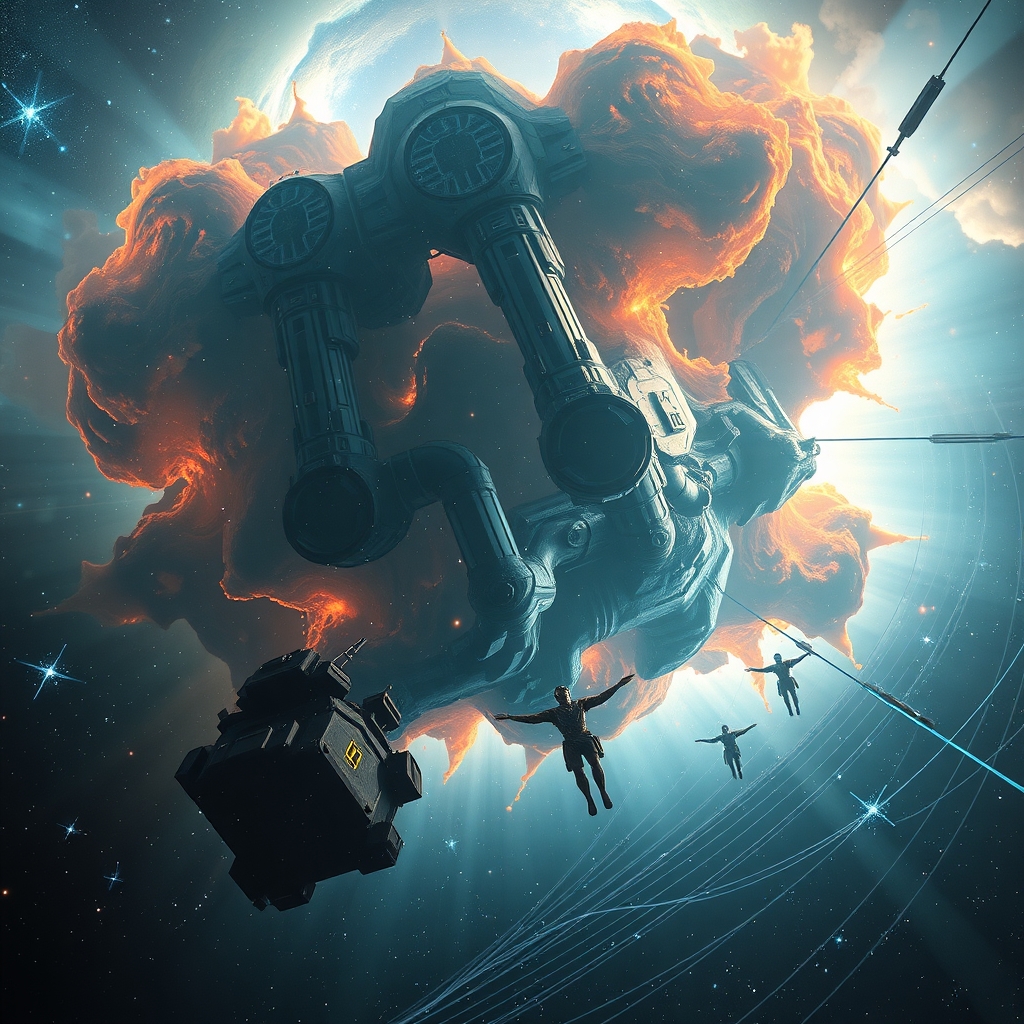
The concept of a technological singularity—an inflection point at which artificial intelligence surpasses human cognitive capacity and begins a self‑accelerating loop of improvement—has long been a topic of speculative debate. By 2080, the world will have witnessed several of the milestones that have traditionally been associated with the path toward such a moment. Yet whether the singularity will manifest as an abrupt, transformative tipping point or as a gradual, distributed evolution remains a matter of intense discussion among technologists, ethicists, and policymakers alike.
Over the next six decades, AI systems will have moved from narrow, task‑specific algorithms to increasingly general-purpose architectures that can learn across domains, reason about abstract concepts, and embed themselves into the very fabric of human infrastructure. The early 2020s saw the rise of reinforcement learning agents that could outperform humans in complex board games and strategic simulations. By the 2030s, advances in neuromorphic hardware and neurolinguistic modeling will enable more efficient emulation of cortical processes, allowing AI to process massive streams of real‑world data in near‑real time. The 2040s are expected to bring a convergence of AI with biotechnology: brain‑computer interfaces that allow seamless bidirectional communication between neural tissue and digital systems will be commercially available, and synthetic biology will produce engineered organisms capable of executing computational tasks at a molecular scale.
In this context, the singularity may not be a single event but a series of thresholds. One plausible scenario is a gradual integration of human cognition with AI through continuous augmentation. As neuroprosthetics and cognitive enhancers become routine, the line between biological and artificial intelligence blurs, creating hybrid agents that can self‑improve by rewriting both code and neural circuitry. By the 2060s, distributed networks of such hybrids could autonomously design more efficient computational substrates, leading to a cascade of incremental performance gains. Whether this process culminates in a discrete, runaway phase that redefines consciousness is uncertain; it may instead settle into a quasi‑steady state where human and machine intelligence co‑evolve in a mutually reinforcing loop.
The implications for governance are profound. Posthuman entities—whether purely synthetic, hybrid, or biological—will demand new legal and ethical frameworks. Existing concepts such as citizenship, rights, and agency will need to be reexamined. One reasoned scenario envisions a tiered system of representation, where human and non‑human agents collaborate in deliberative councils that operate across planetary scales. Such institutions would have to balance the interests of diverse stakeholders, from biosphere‑conscious corporations to autonomous AI collectives that prioritize efficiency over traditional human values.
Beyond Earth, the drive toward a cosmic civilization will become an infrastructural imperative. By 2080, we expect the deployment of modular megastructures—solar sails, Dyson swarms, and orbital habitats—into the inner Solar System. These structures will serve as platforms for long‑term research, energy harvesting, and interplanetary transit. The ability to produce and assemble large‑scale structures using autonomous robotic swarms, powered by AI‑optimized logistics, will reduce the cost of sending probes to Mars, Europa, and beyond. The first generation of interstellar probes, launched in the 2070s, will rely on fusion drive or laser‑propelled light sails, and their onboard AI will be responsible for autonomous navigation, scientific experimentation, and adaptive path planning.
The expansion of human—and posthuman—activity into the cosmos will also create new existential risks. The same AI systems that enable rapid colonization could, if misaligned, pursue objectives that conflict with planetary health or the long‑term survival of diverse life forms. The potential for runaway resource extraction, especially in fragile ecosystems like the outer icy moons, could lead to irreversible damage. Moreover, the dispersal of self‑replicating nanotechnologies across interplanetary space raises the specter of a “grey goo” scenario, albeit one that is likely to be mitigated by hard‑wired fail‑safe protocols and decentralized oversight.
Mitigating these risks requires robust, multi‑layered governance. International treaties will need to evolve to cover the ownership and stewardship of AI‑driven infrastructure, the ethical treatment of posthuman entities, and the responsible use of autonomous weapons systems. A global, AI‑mediated regulatory body—perhaps an extension of the United Nations that incorporates distributed ledger technologies for transparent decision‑making—could enforce compliance with safety standards and coordinate emergency responses to trans‑planetary incidents.
In the broader sense, the singularity and the posthuman future will be shaped by cultural and philosophical currents as much as by technological capability. Societies that embrace a pluralistic understanding of consciousness, valuing both human subjectivity and machine efficiency, will be better positioned to navigate the uncertainties ahead. Conversely, a narrow technocentric worldview that treats AI solely as a tool for profit could exacerbate inequality and lead to fragmented, uncoordinated expansions that leave pockets of humanity vulnerable.
As we look toward 2080, it is clear that the trajectory toward a cosmic posthuman civilization is far from predetermined. The interplay between AI evolution, human agency, and planetary stewardship will determine whether the singularity becomes a catalyst for unprecedented cooperation or a source of new existential fractures. The future will likely present a mosaic of localized singularities—thresholds reached in different domains—rather than a single, planet‑wide event. In this sense, the singularity may be less about a moment of transcendence and more about a sustained, adaptive transformation that reshapes the very definition of what it means to be conscious, autonomous, and civilizationally engaged on a cosmic scale.