When Robots Walk Among Us: 2035’s Quiet Revolution
By 2035, autonomous helpers will blend into homes and streets, but the road to a true singularity remains uncertain and fraught with ethical, technical, and social pitfalls.
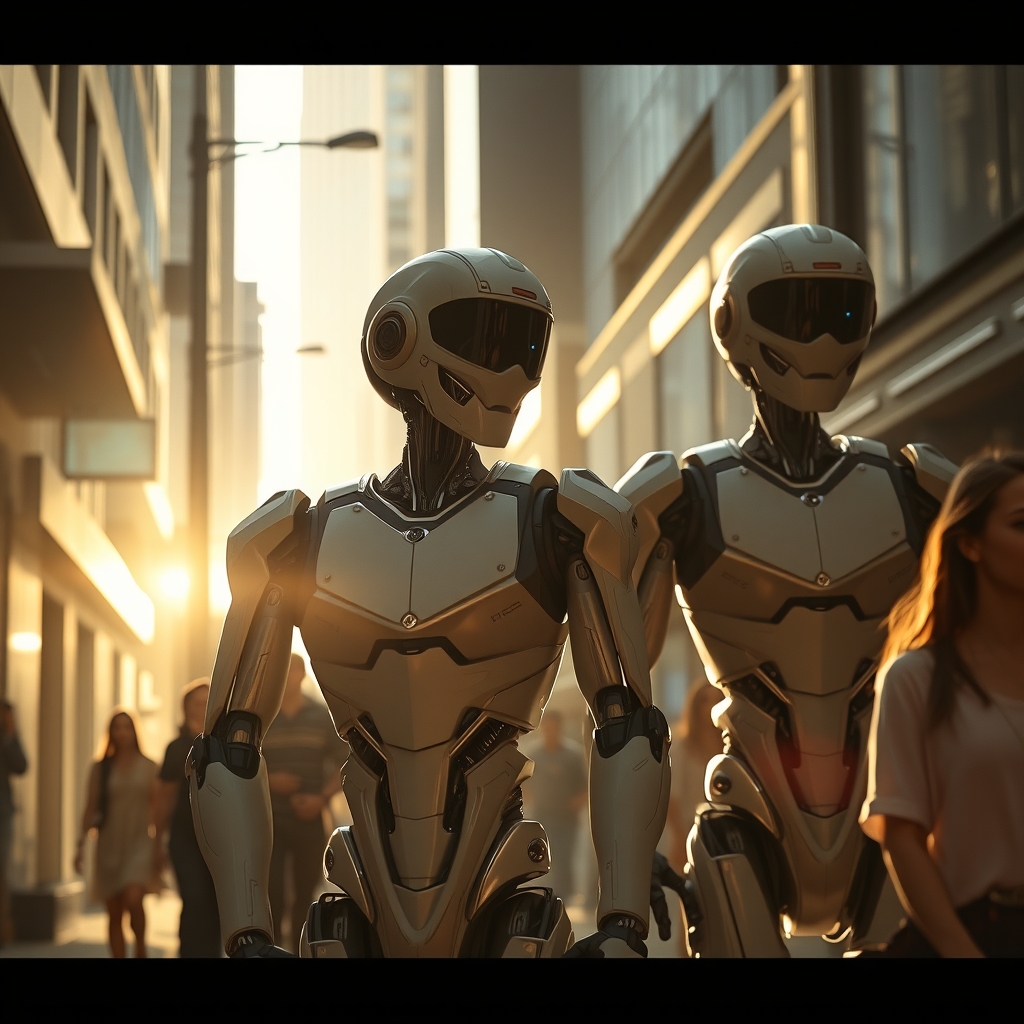
By 2035 the idea of a "robot" will no longer feel like science‑fiction; it will be a familiar sight on sidewalks, in kitchens, and in care homes.
The term "embodied intelligence" captures how a machine’s physical form is inseparable from its cognition. Sensors, actuators, and processors are now tightly integrated, allowing robots to navigate complex environments, manipulate objects, and even interpret social cues. 2025‑2027 saw rapid advances in low‑power neural processors and flexible tactile skins, which have set the stage for more reliable, energy‑efficient units that can operate for days on a single charge.
In domestic settings, small service bots will take on routine chores—vacuuming, sorting mail, and monitoring household safety. In healthcare, modular assistive robots will help with mobility, medication reminders, and bedside companionship. On the commercial side, autonomous delivery units are already testing streets in mid‑size cities, and logistics warehouses are adopting semi‑autonomous pallet movers to streamline operations. These deployments are driven by cost‑effectiveness and the ability of embodied systems to handle messy, unstructured tasks that purely software agents cannot.
However, the technology still faces significant hurdles. Hardware reliability remains a concern; small actuators can fail under repetitive use, and battery chemistry has yet to achieve the density needed for truly mobile long‑term operation. Environmental robustness is another challenge: robots must cope with temperature swings, dust, and accidental impacts without compromising safety. Moreover, the integration of machine perception with real‑time decision making is still error‑prone in high‑variability contexts, such as busy public spaces.
Beyond the technical, the societal implications are profound. The rise of embodied AI will reshape labor markets, potentially displacing low‑skill workers while creating new roles in robot maintenance, programming, and oversight. Privacy concerns mount as robots become more ubiquitous sensors, recording audio, video, and behavioral data. Inequality may widen if access to high‑quality robotic assistance is limited to affluent households or regions with robust infrastructure.
When it comes to the singularity— the point at which artificial intelligence surpasses human cognitive capabilities—the timeline is highly speculative. Some researchers argue that 2035 could see the first prototype of a general‑purpose embodied agent that demonstrates human‑like adaptability, but this would still be a narrow form of generality. Others contend that the convergence of hardware, software, and data infrastructure will require several more decades before any true singularity could emerge. Even if such an event occurs, its impact will depend on how society chooses to manage the transition, including governance, safety standards, and public trust.
Regulatory frameworks are lagging behind deployment. Governments are experimenting with pilot programs that test liability, safety certification, and data protection for robots, but international consensus is still elusive. Ethical guidelines are evolving, often shaped by industry coalitions that emphasize transparency and human oversight. The need to balance innovation with protection against misuse is becoming a central policy debate.
In sum, by 2035 embodied intelligence will have moved from novelty to a functional component of everyday life. The path to a technological singularity remains uncertain, with technical, social, and regulatory challenges that could delay or redirect development. A cautious, collaborative approach—combining rigorous testing, inclusive policy design, and public dialogue—will be essential to ensure that the benefits of embodied AI are realized while mitigating its risks.