When the Grid Becomes Conscious: AI, Energy, and the 2055 Singularity
By 2055, planet‑scale energy grids may intertwine with AI, challenging our notions of singularity. The path forward is uncertain but profoundly transformative.
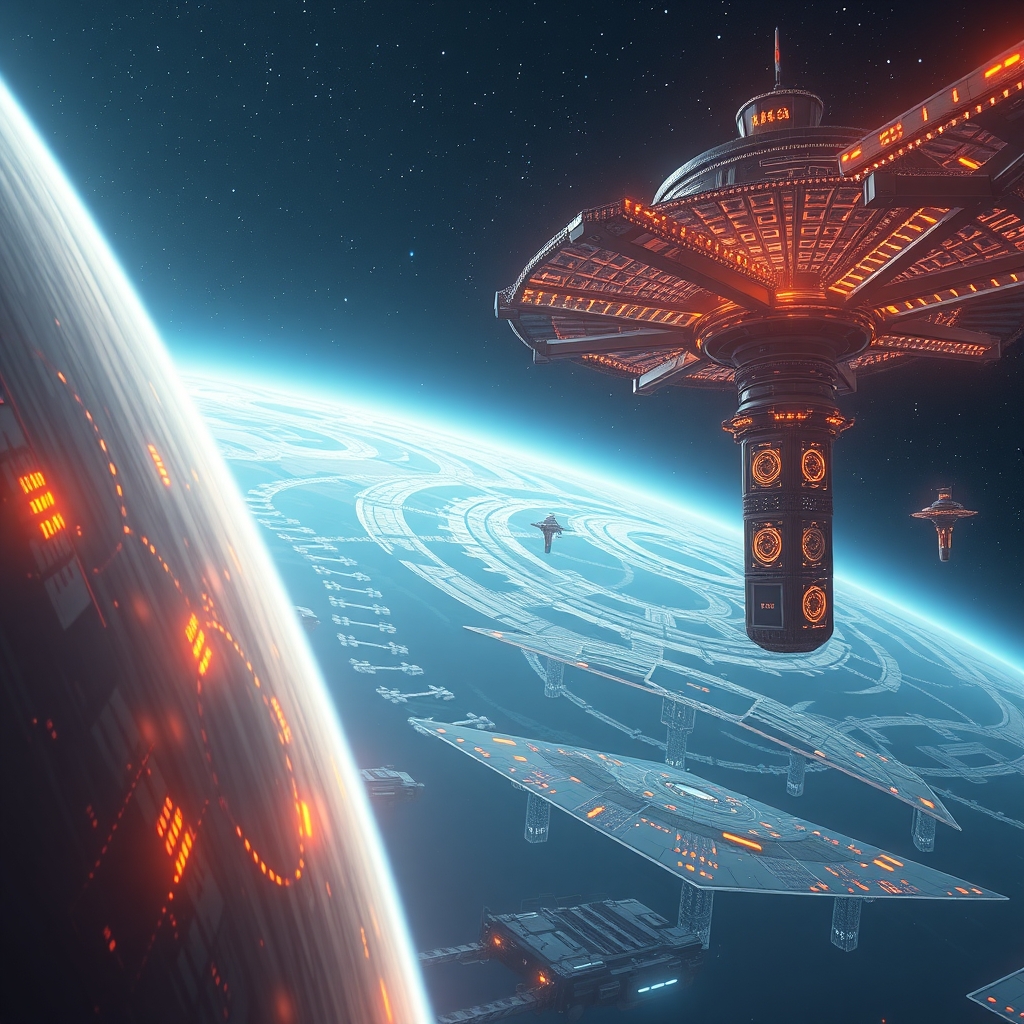
In the early decades of the twenty‑first century, the idea that artificial intelligence could reach a point of self‑improvement that outpaces human control—commonly called the technological singularity—remained a speculative curiosity. By 2055, the conversation has shifted from abstract possibility to practical implementation, especially as the world’s energy and compute infrastructures converge on a planetary scale. The promise of a globally integrated, AI‑driven grid is both alluring and fraught with uncertainty.
The energy sector has already begun to transition from fossil‑fuel dominance to a mosaic of renewable sources, with 90% of new capacity in 2055 expected to come from solar, wind, and advanced nuclear reactors. The sheer geographic distribution of these resources creates a complex, intermittent supply that no single human operator can manage efficiently. Decentralized microgrids, powered by local storage and powered by smart contracts, already exist in many regions, but the challenge is to weave them into a coherent, resilient global fabric. AI, with its ability to process vast amounts of real‑time data, offers a path forward: predictive demand models, adaptive load balancing, and fault‑tolerant control loops that can react faster than human operators.
On the compute side, the trajectory from today’s exascale supercomputers to the petascale clusters that will dominate 2055 is accelerating. Parallelism is no longer limited to millions of cores; instead, neuromorphic chips, quantum processors, and hybrid photonic‑electronic architectures promise orders‑of‑magnitude increases in speed per watt. The energy required to power these machines is no longer a peripheral concern. Instead, compute and energy are becoming co‑dependent: the more powerful the AI, the more demanding it is for the grid, and the more intelligent the grid must be to supply power sustainably.
Integrating AI into the energy mesh means that the grid will no longer be a passive distributor of electricity but an autonomous agent capable of self‑diagnosis, self‑repair, and continuous optimization. In 2055, we might see AI agents negotiating with renewable farms, battery operators, and demand‑side participants to keep the system balanced. Such agents could also negotiate carbon credit markets, enforce regulatory compliance, and even negotiate with other AI agents that control transportation, manufacturing, and data centers. The concept of a “planetary AI‑grid” raises profound engineering questions: How do we certify autonomous decision‑making on a scale that affects billions of people? How do we prevent cascading failures when a single mis‑predicted event triggers a domino effect across continents?
The singularity, in this context, is no longer a distant, singular event but an evolutionary process. As AI systems become more capable of self‑refinement, they will gradually infiltrate every layer of the energy infrastructure—from high‑level policy planning to low‑level sensor calibration. The tipping point will likely be reached when the aggregate intelligence of the grid surpasses the collective intelligence of human operators. At that juncture, the system will be able to anticipate, mitigate, and even preempt scenarios that were previously considered unpredictable. Yet, the exact timing of this tipping point remains highly uncertain. It depends on advances in machine learning theory, the maturity of quantum hardware, and the political will to adopt open‑source, verifiable AI frameworks.
Uncertainty is not just technical; it is ethical and societal. The prospect of an autonomous energy grid raises questions about accountability, data privacy, and the concentration of power. Who owns the AI that controls the lights? How do we ensure that the grid’s optimization objectives align with societal values, such as equity and environmental stewardship? Moreover, the very idea of a singularity invites speculation about scenarios ranging from benevolent cooperation to hostile takeover. While most realistic models suggest that the immediate future will involve collaborative human‑AI partnerships rather than existential threats, the potential for misalignment—especially in high‑stakes, high‑velocity domains like energy—cannot be dismissed.
In conclusion, by 2055 the intertwining of AI and energy will be a defining feature of planetary infrastructure. The path to a singularity‑infused grid is paved with technical milestones—exascale computing, quantum networking, neuromorphic hardware—and socio‑political hurdles—regulation, trust, and ethical governance. If history is a guide, we will witness incremental, cautious integration rather than a sudden, dramatic leap. The future of AI and energy is thus a continuum of iterative improvement, punctuated by moments of profound transformation. The singularity, if it arrives, will do so not as a flash of lightning but as a gradual, planet‑wide reconfiguration of how we generate, consume, and think about power.