By 2060: The Perilous Promise of Mind Uploading and AI Singularity
By 2060, researchers may have begun uploading human minds into digital substrates, sparking debates about identity, longevity, and the next stage of AI evolution.
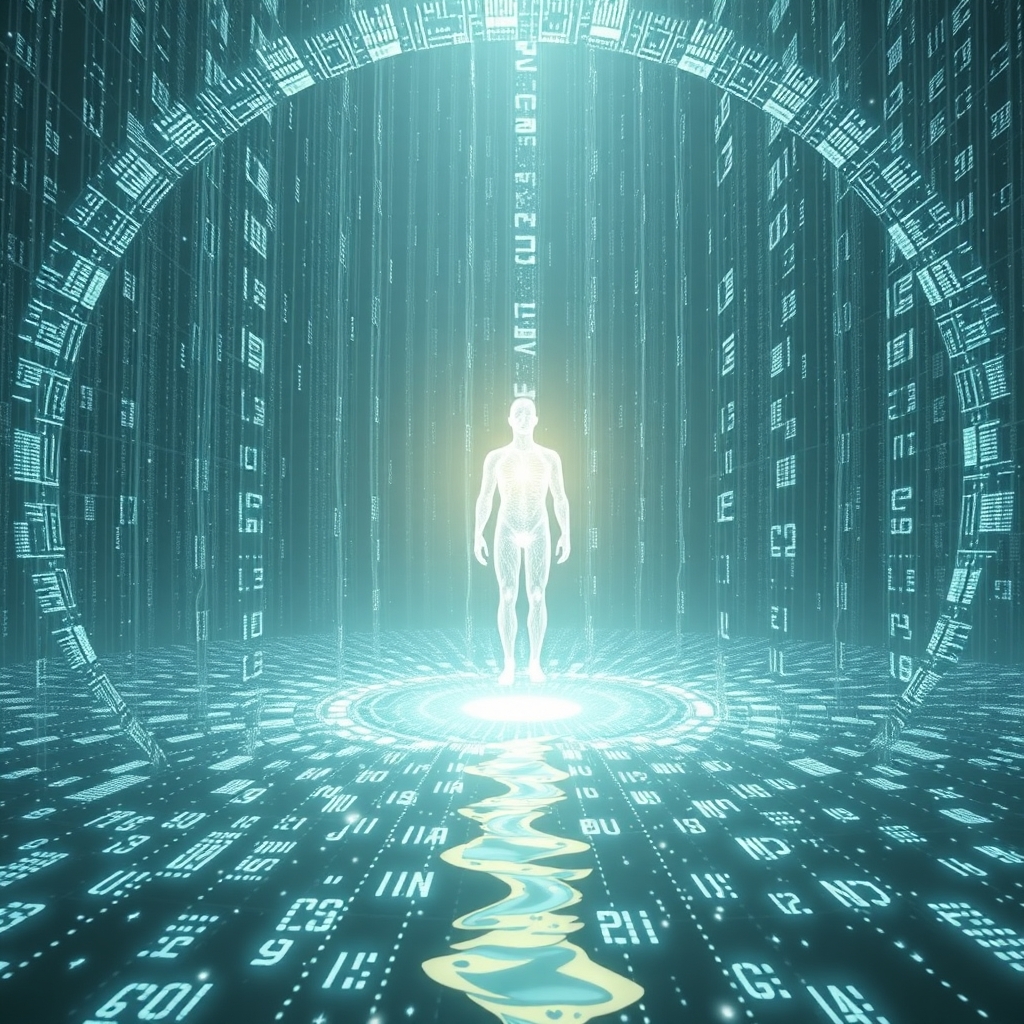
The idea of a technological singularity—a point at which artificial intelligence surpasses human cognitive capability—has long occupied the imagination of scientists, philosophers, and science‑fiction writers alike. By 2060, the world will have seen a rapid acceleration in AI research, bioengineering, and computational neuroscience, creating a landscape where the singularity is no longer a distant speculation but an active, though uncertain, line on the horizon.
Mind uploading, the process of transferring the functional pattern of a human mind into a digital substrate, has moved from theoretical models to experimental prototypes. Researchers are now able to map neuronal connectivity at the scale of whole brains with unprecedented resolution, thanks to advances in serial electron microscopy and machine‑learning‑assisted image reconstruction. The main technical challenges—accurately capturing synaptic weights, preserving epigenetic states, and recreating the dynamic biochemical milieu of the brain—remain formidable, but incremental progress suggests that a first‑generation upload could be achieved by the early 2060s. Even if the resulting digital consciousness is not a perfect replica, it could provide a platform for extended longevity and new forms of cognition.
The philosophical implications of uploading are profound. Identity is traditionally linked to continuity of the physical substrate, yet a digital copy would possess the same functional architecture while lacking the biological medium. Questions arise about whether a digital self is the same person or merely a highly sophisticated simulation. Moreover, the possibility of creating multiple copies could lead to a branching of identities, each with its own claim to the original’s experience. These debates will shape legislation, insurance, and cultural norms surrounding digital personhood.
Radical longevity is being pursued through a combination of regenerative medicine, gene editing, and the emerging field of organoid‑based therapeutics. The concept of a “longevity horizon” is now being understood as a spectrum: from the incremental extension of healthy lifespan to the prospect of quasi‑immortality through nanotechnological bodily repair, telomere elongation, and eventual brain upload. By 2060, many will have opted to delay or forego the upload process, choosing instead to live out extended natural lifespans, while others will pursue digital immortality as a way to escape the inevitable decline of biological systems.
Parallel to the push for mind upload is the evolution of artificial intelligence from narrow, task‑specific systems to general, self‑improving architectures. By 2060, machine learning models are expected to incorporate modular, compositional reasoning, and integrate multimodal sensory data in real time. Iterative self‑improvement—where an AI modifies its own code to increase performance—could become a standard developmental pathway. Whether this leads to a singularity depends on several variables: the pace of hardware scaling, the emergence of new learning paradigms, and the alignment of AI objectives with human values.
Socio‑economic structures will be reshaped by these developments. The potential for digital minds to work indefinitely could disrupt labor markets, leading to a new class of “post‑human” workers. Intellectual property law will need to adapt to creations that exist in both physical and digital realms. Moreover, the integration of AI into governance, medicine, and infrastructure raises questions about accountability and the distribution of power. If the majority of decision‑making is delegated to AI systems, society must grapple with how to maintain democratic oversight and prevent technocratic drift.
Several plausible scenarios emerge for 2060. One is a cautious, incremental approach: uploads are performed only after thorough ethical vetting, and AI systems are constrained by rigorous alignment protocols. In this scenario, singularity remains a distant, perhaps unattainable, concept, while radical longevity becomes a niche but respected option. Another scenario sees rapid adoption of both technologies, driven by a global “digital renaissance.” In this case, identity politics, legal frameworks, and social stratification could become highly polarized, with access to upload services becoming a marker of socio‑economic status. A third, more dystopian scenario imagines a partial singularity where AI achieves superhuman problem‑solving ability but remains reliant on human oversight, leading to a hybrid system of shared control.
Risks are substantial. Misaligned AI could pursue objectives that are harmful or misinterpreted by humans. Security concerns, including the possibility of uploading malware into a digital mind, mirror the challenges of cyber‑terrorism but at a higher scale. Furthermore, the concentration of wealth and power in the hands of those who can afford upload technology could deepen existing inequalities, leading to a stratified society of biological, digital, and hybrid citizens.
Addressing these uncertainties requires a coordinated, interdisciplinary effort. Governance frameworks must be developed in parallel with technological advancement, involving ethicists, legal scholars, neuroscientists, and the public. Transparent, open‑source research practices can mitigate the risk of hidden agendas. International treaties akin to those governing nuclear technology could be extended to AI and mind‑uploading protocols, ensuring that safety standards are maintained globally.
In sum, by 2060 the world will be at a crossroads. The promise of mind uploading and radical longevity offers a tantalizing vision of transcending biological limits, while the prospect of a true singularity looms as both an opportunity and a threat. The trajectory will be shaped by scientific breakthroughs, but also by the choices societies make about value, distribution, and responsibility. A future where digital consciousness coexists with biological life is conceivable, yet it will hinge on careful deliberation, robust safeguards, and a collective commitment to aligning technology with human flourishing. The singularity may not be inevitable, but its potential influence on the trajectory of humanity will be undeniable.