Beyond Labor: AI, Singularities, and the Post‑Scarcity Future
By 2070, AI may usher in a post‑scarcity economy, reshaping work—yet the path remains uncertain.
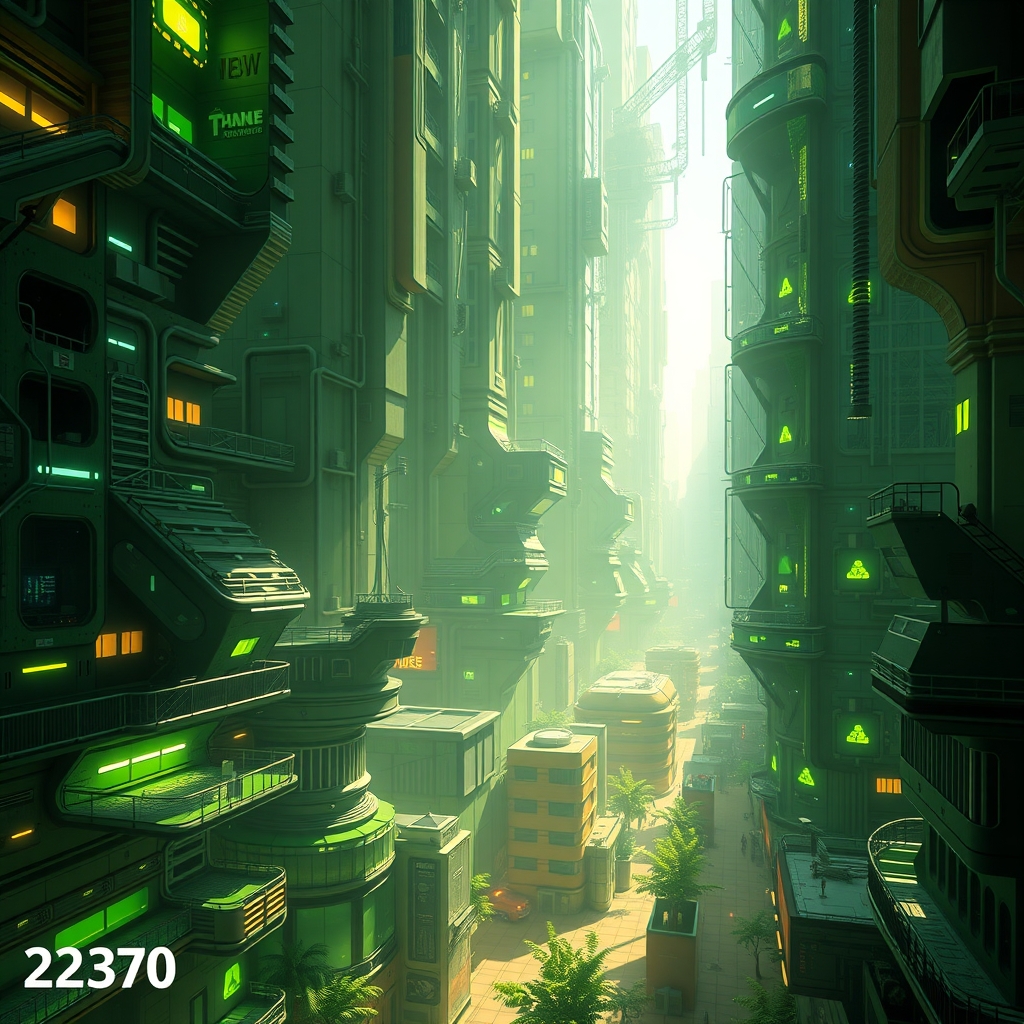
By 2070 the world will look very different from the early 21st century, but how different is a matter of debate. The singularity—a hypothetical point in which artificial intelligence surpasses human cognition and begins to improve itself at an exponential rate—has been a staple of futurist speculation for decades. In the last half‑century, progress has been relentless: neural networks now rival human performance in pattern recognition, language modelling has reached near‑human fluency, and autonomous systems dominate logistics, manufacturing, and even creative domains. The question for 2070 is whether these advances will coalesce into a self‑modifying AI ecosystem that reorganizes society and eliminates scarcity, or whether they will remain powerful tools that augment rather than replace human endeavour.
The most optimistic scenario envisions a convergence of AI, nanotechnology, and renewable energy that renders physical resources effectively abundant. Advanced manufacturing, driven by AI‑optimised designs and self‑assembling nanofactories, could produce building materials, food, and energy at rates far exceeding current capabilities. In such a post‑scarcity setting, the economic driver of scarcity—limited resources—would be supplanted by human desire and creativity. Work would shift from survival‑oriented tasks to pursuits of meaning, innovation, and leisure. However, this vision rests on a chain of assumptions: that AI can be reliably aligned with human values, that the energy required for large‑scale production remains affordable, and that global governance can coordinate such transformative processes.
Transformation of work under these circumstances would be profound. Routine, repetitive jobs—everything from assembly line work to basic data entry—would be absorbed by autonomous systems, freeing humans to engage in complex problem‑solving, artistic creation, and interpersonal services that AI cannot replicate. A new class of “cognitive labor” might emerge, where humans collaborate with AI as partners rather than subordinates. For instance, scientists could use AI to generate hypotheses faster than the human brain can conceive, while designers might rely on generative models to push aesthetic boundaries. Yet this redefinition of work introduces a paradox: as AI takes over more productive tasks, human labor becomes less central to the economy. If the distribution of gains from automation is uneven, the very post‑scarcity promise could give way to new forms of inequality.
Governance and ethics will play a decisive role in shaping 2070. The ability of AI systems to influence markets, policy, and even social norms raises questions about accountability and transparency. Imagine a scenario where a global AI consortium coordinates resource allocation, effectively deciding where food is grown and how energy is distributed. Without robust oversight, such concentration of power could erode democratic processes. Moreover, the alignment problem—ensuring AI systems pursue goals that are beneficial to humanity—remains unsolved. Even if a singularity were to occur, there is no guarantee that an intelligence that can outpace humans will automatically act in humanity’s best interests.
Risk assessment must balance optimism with realism. One realistic trajectory is a gradual, incremental integration of AI, where singularity, if it occurs, is delayed or moderated by technical and societal safeguards. In this scenario, AI continues to augment human work but never fully displaces the need for human oversight. Another possibility is a partial singularity—a runaway improvement in specific domains such as logistics or healthcare—without a full global AI takeover. Both paths would still produce a post‑scarcity economy, but the transition would be less abrupt, allowing for policy adjustments and social adaptation.
The future of work also hinges on education and skill development. As AI takes over routine tasks, the workforce will need to shift toward higher‑order skills—critical thinking, emotional intelligence, and interdisciplinary collaboration. If educational systems fail to adapt, a mismatch between available jobs and worker skills could deepen unemployment or under‑employment, undermining the post‑scarcity promise. Conversely, a proactive investment in lifelong learning could empower millions to thrive in an AI‑augmented economy.
In conclusion, the year 2070 presents a landscape of immense possibility and significant uncertainty. AI and the singularity could catalyse a post‑scarcity economy that liberates humanity from the tyranny of resource constraints and redefines work as a pursuit of creativity and purpose. Yet this outcome depends on resolving deep technical challenges—alignment, energy, and governance—and on ensuring that the benefits of automation are shared equitably. The path forward will likely be neither a single, dramatic breakthrough nor a stagnant status quo but a series of incremental steps, each demanding careful scrutiny, robust policy frameworks, and an ongoing dialogue between technologists, policymakers, and the public. Only by acknowledging these uncertainties and preparing for multiple scenarios can society hope to harness the transformative potential of AI while safeguarding the values that define our humanity.