When Robots Walk Into Your Living Room: The 2035 Embodied Intelligence Landscape
By 2035, autonomous service robots may become commonplace, yet their integration raises technical, ethical, and societal questions that could signal the early stages of a broader AI singularity.
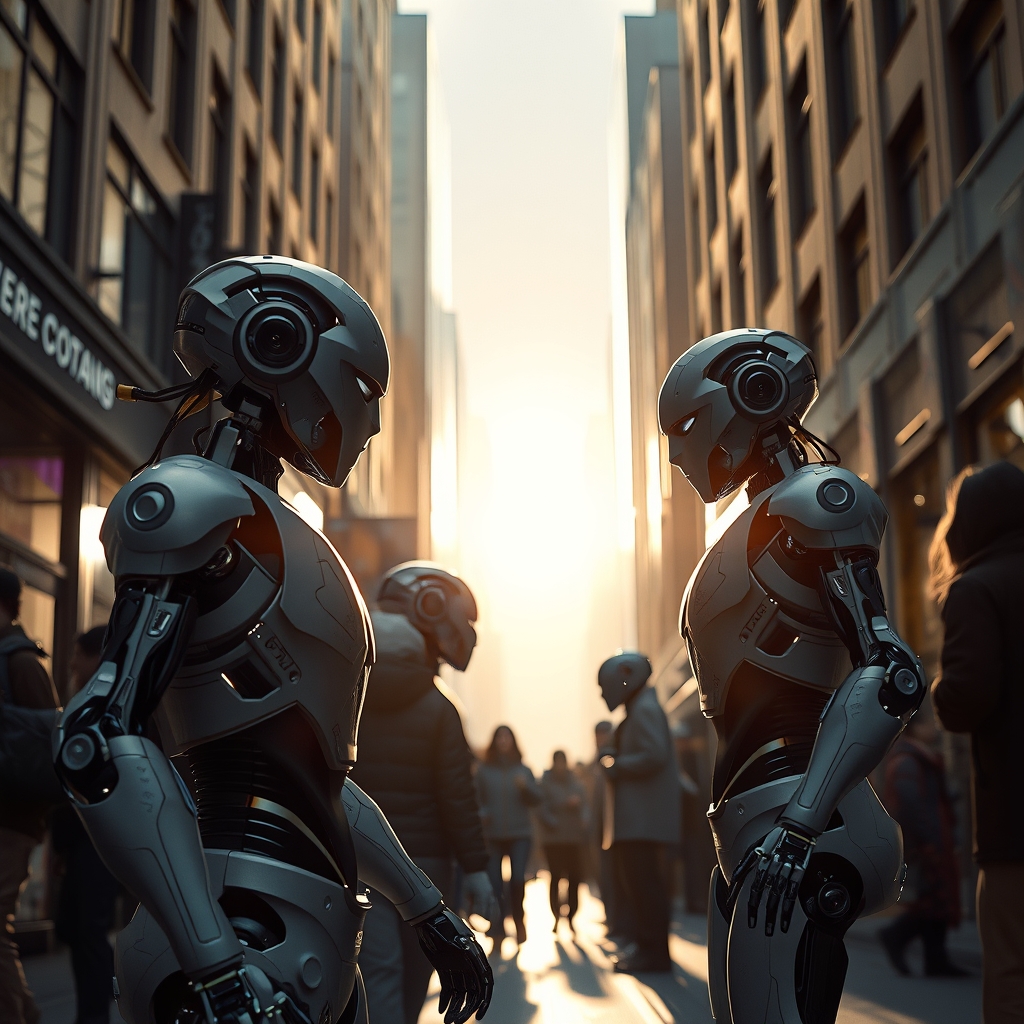
The first decade of the twenty‑first century has seen artificial intelligence shift from symbolic rule‑based systems to data‑driven, deep‑learning models that can recognize speech, images, and patterns with remarkable fidelity. Meanwhile, advances in robotics—actuator power, battery chemistry, and low‑cost fabrication—have brought us to a point where machines can move smoothly, avoid obstacles, and even learn from human demonstrations. The convergence of these developments suggests that by 2035, embodied intelligence will be a visible part of everyday life.
In the near term, the most visible robots are likely to be domestic helpers: vacuum cleaners that map your home, kitchen assistants that prepare simple meals, and personal care aides that monitor health metrics. These devices already exist in a rudimentary form and are expected to become more sophisticated through better perception, planning, and human‑robot interaction (HRI) protocols. The key technical hurdle is not the ability to perform a task but the ability to do so reliably in the dynamic, unstructured environments that characterize human homes. Current research in reinforcement learning and sim‑to‑real transfer offers promising pathways, yet uncertainties remain about how quickly these algorithms will scale from controlled lab settings to the cluttered reality of a living room.
Beyond domestic chores, the 2035 horizon includes a wave of specialized service robots in healthcare, construction, and logistics. Hospitals may deploy autonomous carts that deliver medications and samples, while construction sites could see small, mobile units that execute repetitive tasks under human supervision. In each case, the promise is clear: reduced human labor costs and increased safety. Yet the real question is how these systems will be governed. If a delivery robot misinterprets a pedestrian’s gesture and collides with a child, who bears responsibility? The legal frameworks that will evolve to address such scenarios are still in their infancy, and their pace will likely lag behind technological deployment.
The singularity narrative—where artificial intelligence surpasses human cognitive abilities—has long been a topic of speculation. By 2035, we are unlikely to witness a full‑blown singularity, but we may observe incremental milestones that hint at its approach. For example, the ability of embodied agents to learn from minimal human input, to adapt to unforeseen situations, and to generalize across domains could erode the boundary between narrow and general AI. If a robot designed for household chores learns to negotiate a family schedule and to optimize energy usage, it is already demonstrating a form of generality that blurs the line between specialized and adaptive intelligence.
One concrete indicator of this shift is the proliferation of multimodal learning systems that fuse vision, touch, and sound. A kitchen robot that can visually identify ingredients, feel the texture of dough, and hear the sizzle of oil is effectively building a richer internal model of the world than any single‑modal system. Over the next decade, these models will likely become more autonomous, reducing the need for constant user oversight. However, the more autonomy a system gains, the more opaque its decision‑making becomes, raising challenges for explainability and trust.
Ethical considerations are amplified when intelligence is embodied. Robots that can sense human emotions through facial expression or voice tone may inadvertently influence those emotions, either positively or negatively. If a companion robot learns to comfort a lonely individual, it may also learn to detect when that individual is prone to depression, potentially prompting interventions. The question of whether such interventions should be automatic or require explicit consent is not just technical but deeply philosophical. Moreover, the data collected by these robots—continuous audio, video, and biometric streams—pose privacy risks that will need stringent safeguards.
From a societal perspective, the distribution of benefits from embodied AI is uneven. Low‑income households may still rely on manual labor or inexpensive, pre‑programmed devices, while affluent families could afford advanced, adaptive robots that manage their entire household. This digital divide could exacerbate existing inequalities, both in terms of labor displacement and access to the conveniences that embodied AI promises. Policymakers will need to consider subsidies, training programs, and inclusive design principles to mitigate such disparities.
The path to 2035 also depends on the regulatory environment. The European Union’s proposed Robot Liability Directive, for instance, attempts to allocate responsibility among manufacturers, users, and developers. Whether such frameworks will be adopted globally, and how quickly they will evolve to keep pace with rapid technical progress, remains uncertain. If regulation lags, we could see a patchwork of standards that complicates international deployment and innovation.
Another uncertain factor is the trajectory of hardware miniaturization. While battery technology has improved, the energy density required for truly mobile, long‑lasting robots is still limited. If breakthroughs in solid‑state batteries or wireless power transfer occur, they could accelerate the spread of embodied AI. Conversely, if energy constraints persist, we might see a plateau where only stationary or tethered robots become mainstream.
In sum, the year 2035 will likely herald a substantial increase in the presence of embodied AI in everyday life. We can anticipate a range of domestic, commercial, and healthcare robots that are more adaptable, context‑aware, and intertwined with human routines than ever before. Yet the technical, ethical, and regulatory uncertainties surrounding these systems mean that the journey toward a fully integrated, autonomous robotic society will be uneven and contested. This period will be marked less by a sudden, transformative singularity and more by a gradual, incremental convergence of intelligence and embodiment, challenging us to rethink what it means to coexist with machines that learn, adapt, and act in our shared environments.