Beyond the Grid: Energy, Compute, and the 2055 Singularity
By 2055, global energy and compute networks may be interwoven into a planetary substrate that challenges current notions of AI autonomy and the singularity.
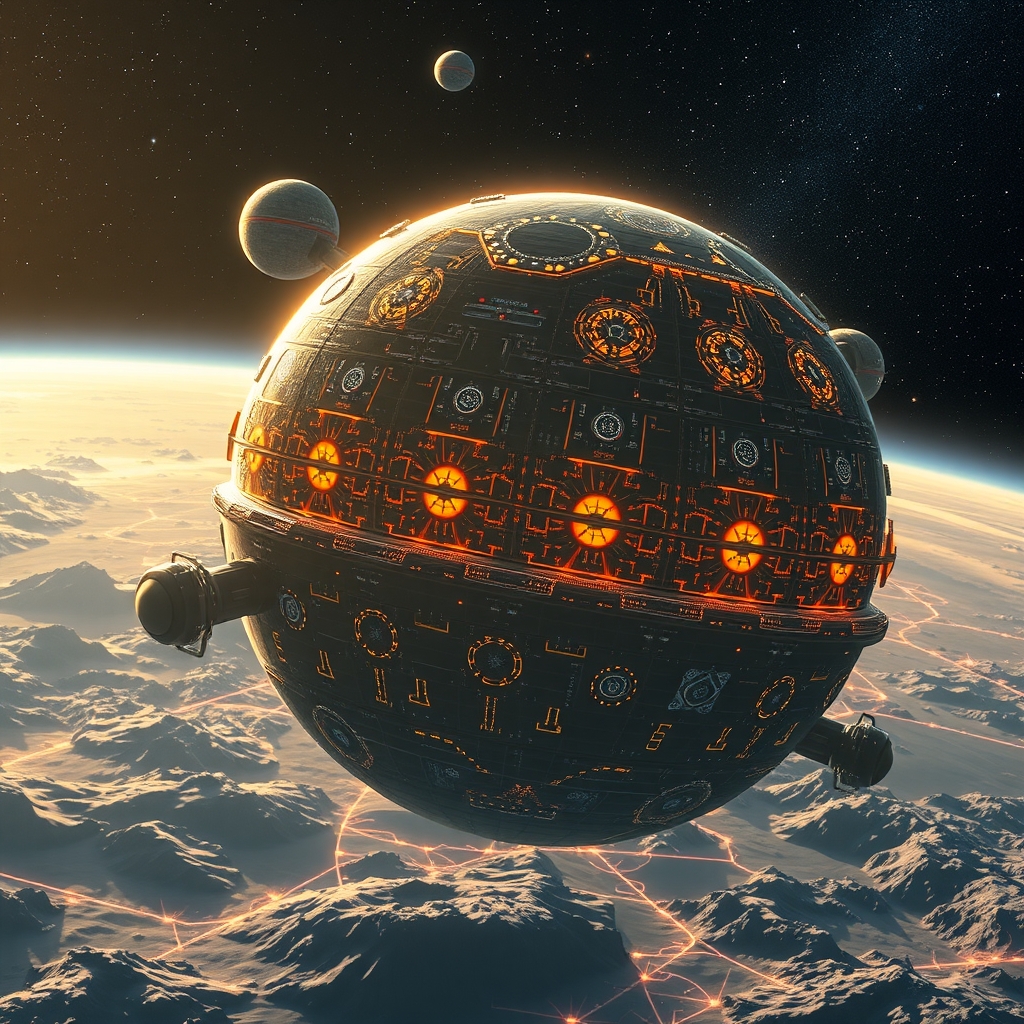
In the decade that has passed since the early 2020s, the world has moved from a patchwork of regional power systems toward a more integrated, digitally‑managed energy fabric. The initial promise of decentralized renewables has been tempered by the need for reliability, leading to a resurgence of large‑scale storage and the rapid deployment of low‑cost micro‑grids. Simultaneously, advances in silicon, photonics, and quantum hardware have pushed compute toward the exascale regime, but not without escalating power demands.
Fusion research, once considered a distant dream, has entered a phase of commercial feasibility by the early 2030s. Pilot fusion plants are now producing net energy, and their high‑temperature plasma environments are being harnessed for high‑density computing nodes. Parallel to this, the hydrogen economy has matured; blue hydrogen from natural gas with carbon capture, and green hydrogen from electrolyzers powered by excess renewables, now supply the bulk of industrial processes. These developments provide the backbone for a continuous, high‑capacity power grid that can support the massive heat loads of advanced computing.
On the computational front, exascale supercomputers have become commonplace in national laboratories, but the real transformation comes from distributed architectures. Neuromorphic chips that mimic synaptic plasticity, quantum processors that excel at specific optimization tasks, and photonic interconnects that reduce latency have been woven into a planetary mesh. Edge devices—smart sensors, autonomous vehicles, and IoT hubs—now run sophisticated inference models locally, yet they also participate in a global compute fabric that aggregates data and redistributes workloads in real time. This mesh is governed by a combination of open‑source protocols and proprietary standards, all of which evolve rapidly as new hardware emerges.
The convergence of energy and compute leads to a planetary‑scale substrate that is both resilient and adaptive. Data pipelines span continents, with information traveling across fiber, satellite, and even quantum entanglement links. Energy grids dynamically route power to the most demanding computation centers, while compute nodes feed back real‑time analytics that optimize grid stability. The result is a self‑organizing system in which power and information co‑evolve, blurring the lines between infrastructure and intelligence.
In such an environment, the threshold for a technological singularity looms closer. The concept of a singularity—where artificial general intelligence (AGI) surpasses human cognitive capabilities—has always rested on the availability of sufficient compute. With planetary compute at hand, AGI systems could, in theory, iterate on their own architecture at unprecedented speeds. Feedback loops may emerge, in which AI refines its own hardware, software, and energy use, accelerating progress in a manner that is difficult to predict or control.
However, all of this rests on a series of uncertainties. Technically, the reliability of fusion reactors, the scalability of quantum processors, and the long‑term stability of neuromorphic hardware remain open questions. Politically, the global distribution of resources—rare earth elements, uranium, and even bandwidth—could create new geopolitical tensions. Ethically, the prospect of a self‑optimizing AI that can redesign its own hardware raises profound questions about accountability, safety, and the alignment of goals with human values. Each of these factors introduces a layer of risk that could either accelerate or stall the approach to a singularity.
One plausible scenario envisions the planet‑wide compute fabric becoming an implicit substrate for a distributed AI. In this world, AI agents are not confined to data centers but are embedded in every node of the energy grid, communication network, and industrial system. They collaboratively manage resources, predict failures, and even co‑design new hardware components on the fly. The singularity, in this sense, would not be a single monolith but a distributed, emergent intelligence that permeates infrastructure. While such a system could solve complex global challenges—climate modeling, disease outbreak prediction, and energy optimization—it could also become opaque, difficult to audit, and potentially misaligned with human priorities.
Ultimately, the trajectory toward 2055 will be shaped by how societies choose to balance ambition with prudence. Robust governance mechanisms, transparent research, and international cooperation will be essential to harness the benefits of planetary‑scale energy and compute without succumbing to catastrophic risks. The singularity, if it arrives, will likely be a product of incremental integration rather than a sudden leap. By recognizing the uncertainties and acting deliberately, humanity can steer this convergence toward outcomes that enhance resilience, equity, and long‑term sustainability rather than untested speculative horizons.