Beyond the Body: 2060 and the Reality of Mind Uploading
By 2060, research into mind uploading and radical longevity may offer glimpses of digital immortality, but technical, ethical, and societal hurdles remain.
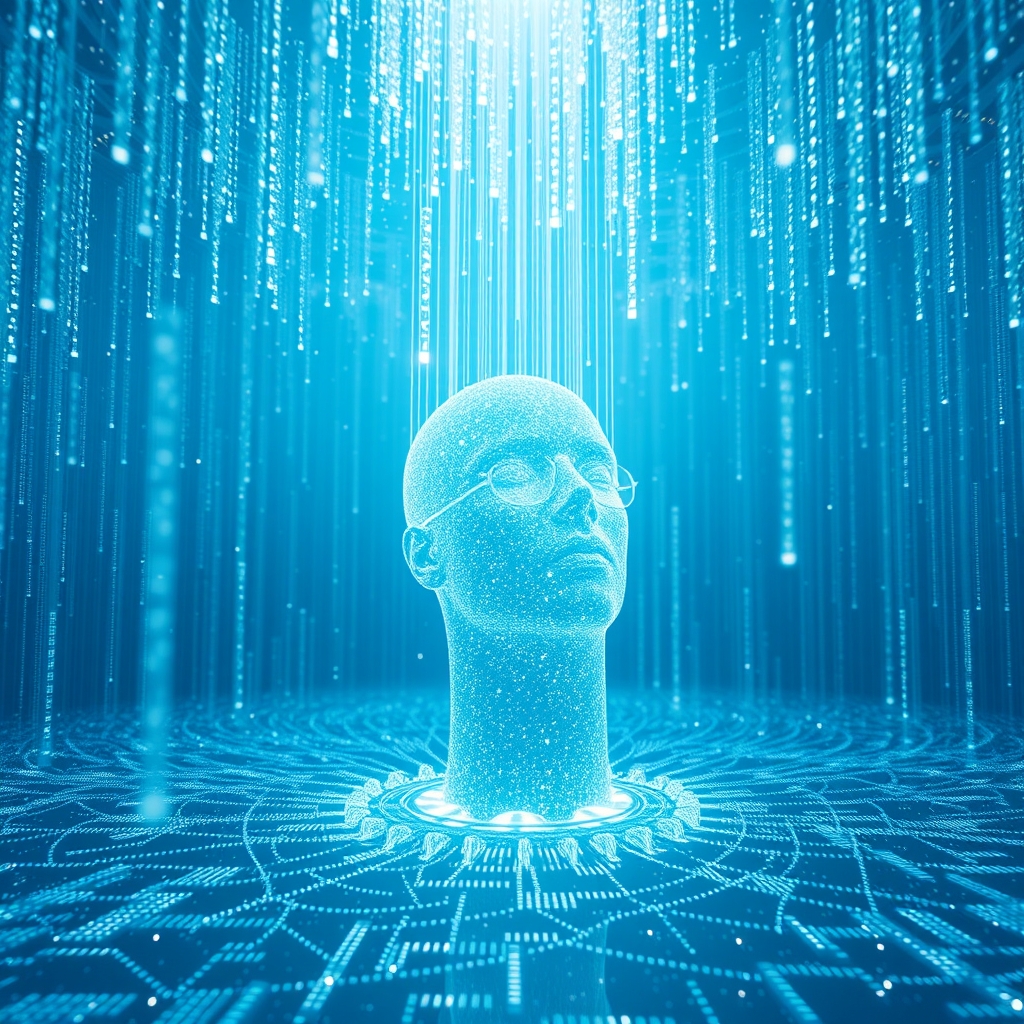
In the early 2060s, the world is poised on the brink of a profound shift in how we conceive of consciousness, identity, and mortality. The convergence of high‑resolution connectomics, quantum‑enhanced computing, and sophisticated machine‑learning frameworks has pushed the boundaries of what is technically possible, yet the prospect of uploading a human mind into a digital substrate remains a speculative frontier rather than a settled fact.
The notion of mind uploading—capturing the functional state of a brain and replicating it in a non-biological medium—has long occupied a space between science fiction and academic research. Current efforts focus on mapping neural circuitry at the level of individual synapses, a task that demands unprecedented imaging fidelity and data throughput. Even with the most optimistic projections, the sheer amount of information required to represent a single human brain exceeds the capabilities of today’s storage and processing architectures by several orders of magnitude. Thus, any claim of imminent success must be tempered by the recognition that our scientific models of consciousness, let alone the precise mechanisms that give rise to subjective experience, are still in their infancy.
From a technical standpoint, the path to a functional upload involves three intertwined challenges: accurate neural mapping, faithful dynamical simulation, and robust interfacing between biological and silicon substrates. While advances in electron‑microscopy and light‑sheet imaging have begun to produce detailed structural maps, translating these into executable models requires algorithms that can capture the non‑linear, context‑dependent interactions that define cognition. Parallel to this, the hardware frontier—particularly the emergence of neuromorphic processors and quantum‑accelerated simulations—offers a glimpse of the computational resources that might one day sustain a living digital mind. Nevertheless, the energy efficiency and scalability of such systems remain uncertain, and it is unclear whether they can accommodate the adaptive plasticity inherent in human thought.
Several plausible scenarios emerge when considering the timeline to 2060. In a “partial success” scenario, researchers might achieve a rudimentary digital replica that preserves basic memory traces and procedural knowledge but lacks the richness of full consciousness. This could serve as a tool for therapeutic interventions or as a platform for extended learning. Alternatively, a “full success” scenario—though currently speculative—would involve a seamless transfer of subjective experience into a digital substrate, allowing a consciousness to persist beyond the biological limits of its original host. A third possibility is a continued failure, either due to insurmountable technical barriers or a fundamental misunderstanding of what constitutes a self. Each of these outcomes carries distinct implications for how society might integrate such technologies.
Parallel to the quest for upload is the field of radical longevity, where breakthroughs in gene editing, nanomedicine, and regenerative biology aim to extend the healthy human lifespan well beyond its current limits. By 2060, we may witness protocols that arrest or reverse cellular senescence, repair DNA damage with unprecedented precision, and deploy autonomous nanobots to maintain physiological homeostasis. The result could be a generation that routinely lives past a century, with healthspan approaching lifespan. Whether these biological extensions will coexist with digital continuations of consciousness is a question that will shape the ethical, legal, and cultural landscape of the era.
The intersection of mind uploading and radical longevity suggests a spectrum of possible futures. One possibility is a hybrid model in which biological bodies are maintained in a quasi‑immortal state while individuals periodically back up their minds to digital archives, creating a safety net against cognitive decline. Another scenario envisions a full migration, where the biological substrate is eventually deemed unnecessary, and consciousness migrates entirely to a digital platform, perhaps even across different architectures or networks. Each model raises questions about identity continuity, the nature of agency, and the definition of life itself.
Ethically, the prospect of uploading and extending life forces us to revisit longstanding debates about personhood, rights, and the distribution of scarce resources. If a digital mind can access information instantaneously and share experiences across networks, how should society regulate such entities? Will there be new classes of social privilege associated with access to longevity treatments or upload technology? Moreover, the legal system will need to grapple with questions of inheritance, contracts, and liability for beings that are no longer bound by biological constraints.
In sum, by 2060 the convergence of neuroscience, computing, and biology will have pushed the limits of what is technically possible, but whether mind uploading and radical longevity will become practical realities remains uncertain. The trajectory will likely be shaped by incremental scientific discoveries, regulatory frameworks, and cultural attitudes toward mortality and identity. While the allure of digital immortality promises transformative possibilities, it also demands a sober assessment of the technical, ethical, and societal challenges that lie ahead. The future may well reveal a spectrum of outcomes—partial successes, hybrid models, or a continued plateau—each offering valuable lessons about the limits of human ingenuity and the complex interplay between technology and the human condition.