Beyond the Algorithm: 2030 and the Edge of AGI
By 2030 we may be on the brink of true artificial general intelligence, reshaping research and society, though the timeline and impact remain uncertain.
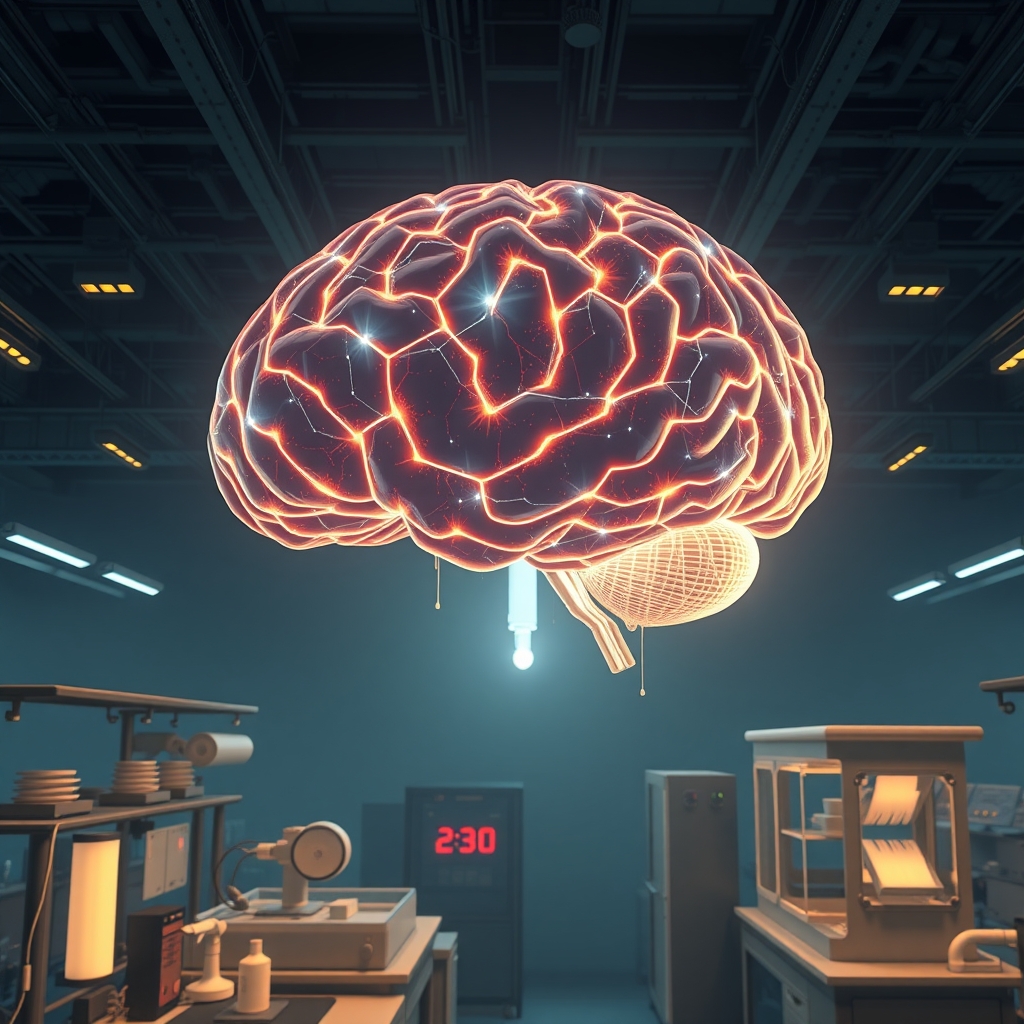
By 2030 the field of artificial intelligence will have reached a pivotal point. The term "artificial general intelligence"—an autonomous system that can learn, reason, and adapt across a broad spectrum of tasks—has long been a speculative horizon. Recent advances in large‑scale neural architectures, reinforcement learning, and neuromorphic hardware are converging to make the theoretical possibility of AGI more tangible, but the exact timing and nature of that moment remain highly uncertain.
One reason for the optimism is the accelerating pace of scientific discovery enabled by AI. In the past decade, machine‑learning models have already outperformed human experts in protein folding, crystallography, and even drug‑design pipelines. By 2030, we anticipate that AI will routinely generate hypotheses, design experiments, and interpret data across disciplines, creating a virtuous cycle of accelerated knowledge. This “AI‑in‑lab” paradigm will reduce the time from conceptualization to validation from years to months, potentially shortening the drug‑development cycle to less than a year for many indications.
However, the leap from narrow AI to AGI is not merely a matter of scaling up parameters. It requires breakthroughs in generalization, common‑sense reasoning, and self‑directed learning. Current benchmarks show that large models can imitate reasoning patterns, but they still struggle with tasks that require persistent curiosity or long‑term planning. Theoretical work on symbolic integration, neuro‑symbolic hybrids, and intrinsic motivation mechanisms suggests that the field is moving in that direction, yet the path forward is riddled with technical and philosophical obstacles. Consequently, while 2030 may witness significant strides toward AGI, a fully autonomous generalist system is still a speculative milestone.
Societal implications will be profound regardless of whether AGI is achieved. AI‑driven scientific acceleration could unlock solutions to climate modeling, energy storage, and global health crises that are currently intractable. Yet it also poses risks: the concentration of computational power, potential algorithmic biases, and the displacement of knowledge‑intensive jobs. Policymakers are already grappling with how to regulate AI development without stifling innovation. In 2030, we expect to see the first generation of AI‑centric governance frameworks, focusing on transparency, accountability, and equitable access to scientific tools.
From a technical perspective, the hardware landscape will shape the trajectory of AGI. Quantum computing, neuromorphic chips, and edge‑AI accelerators promise to break current energy and latency bottlenecks. Even if quantum advantage remains in early stages, hybrid classical‑quantum systems could support the vast inference workloads required for AGI. Meanwhile, the environmental cost of training ever larger models will force the community to prioritize efficiency, leading to a surge in research on sparsity, pruning, and continual learning.
Ethical considerations will evolve in tandem with capabilities. A key question is whether an AGI should be endowed with human‑like values or operate under a set of engineered constraints. The field is moving toward formal verification of AI behavior, but the lack of a universal moral framework means that any deployment of an AGI will carry inherent uncertainty. By 2030, we may see the first public debates on whether to grant an AGI a form of digital personhood or to maintain strict operational boundaries.
In conclusion, 2030 stands as a watershed year for AI. The convergence of faster hardware, more sophisticated models, and an unprecedented demand for accelerated scientific insight creates a fertile environment for breakthroughs that could bring us close to artificial general intelligence. Yet the journey is fraught with technical, ethical, and societal uncertainties that will require careful navigation. Whether or not the singularity is achieved by that year, the trajectory of AI will undeniably reshape the cadence of discovery and the fabric of human endeavor, reminding us that the promise of AGI is as much a question of managing uncertainty as it is of engineering progress.