When the Home Meets the Machine: Embodied AI in 2035
In 2035, domestic robots will be commonplace, yet the path to a technological singularity remains uncertain.
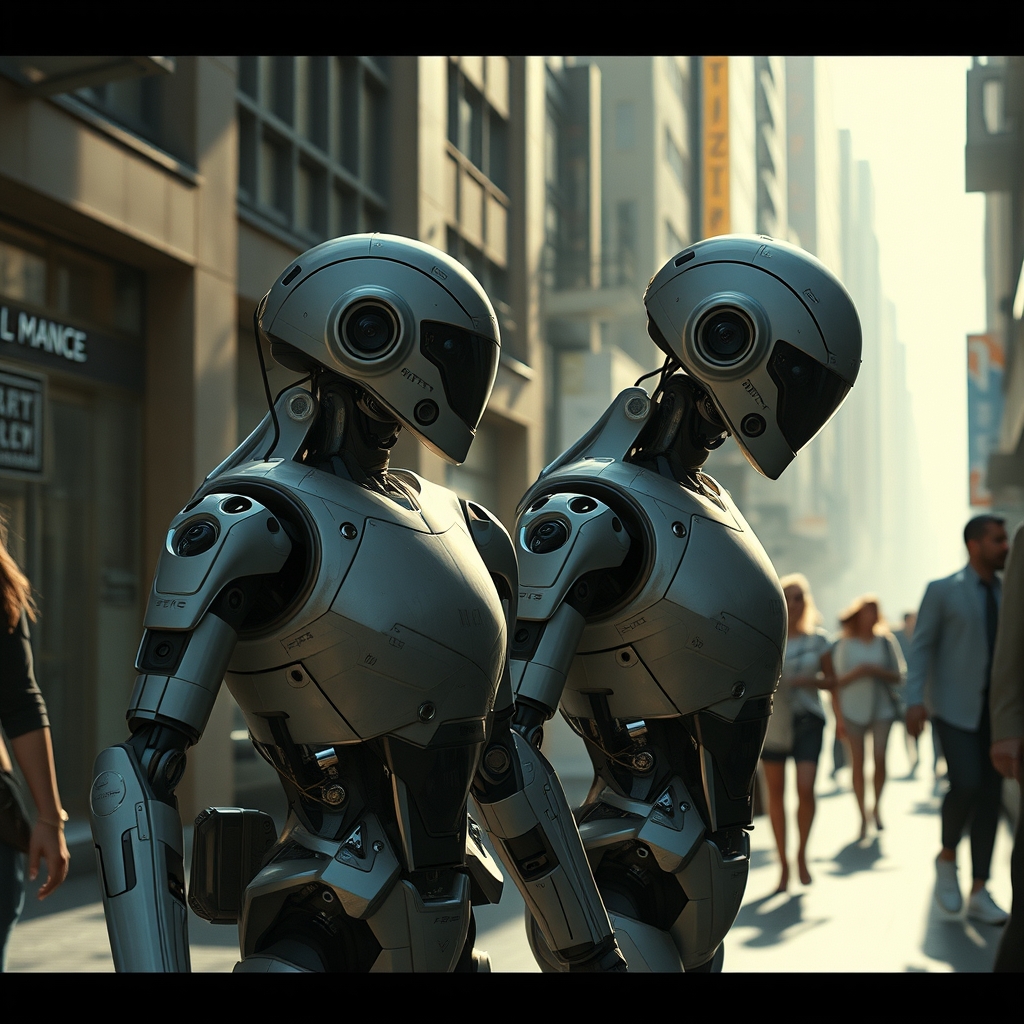
When the Home Meets the Machine: Embodied AI in 2035
The first time most people will hear the word “singularity” in conversation, it will be while a kitchen assistant robot is refilling the pantry or a personal transport drone nudges a child to an open window. By 2035, the line between human living spaces and autonomous machines is expected to blur enough that the presence of embodied intelligence will be as familiar as a refrigerator or a smart speaker.
Current progress in embodied AI is driven by a confluence of hardware miniaturisation, advanced perception algorithms, and more nuanced motor control. Lighter, cheaper batteries and micro‑actuators allow robotic platforms to survive in cluttered home environments, while computer‑vision systems trained on billions of images can recognise faces, objects, and even emotional cues with increasing reliability. Companies that once focused on industrial manipulation are now investing in domestic use‑cases, and the first generation of consumer‑grade service robots—cleaners that can navigate a living room, caregivers that can administer medication, and personal assistants that can prepare simple meals—will likely ship in the early 2030s.
Beyond the obvious convenience, the true impact of embodied intelligence will be felt through the way these devices learn from and adapt to their occupants. Unlike the megabytes of data that power today’s cloud‑based recommendation engines, embodied agents accumulate a continuous stream of sensory streams—visual, tactile, auditory—from the physical world. This real‑time data feed enables them to refine their behaviour in situ, developing personalised routines that are both more efficient and more attuned to the emotional rhythms of a household. However, this same capability raises significant privacy concerns: a robot that can see and hear every corner of a home must also be designed to limit data leakage and ensure that sensitive information never leaves the local enclave.
The social ramifications are equally complex. On one hand, embodied AI can alleviate the burden of routine chores, reduce the need for human labour in physically demanding tasks, and even provide companionship to the elderly or isolated. On the other hand, a sudden shift in the domestic labour market could exacerbate economic inequalities if small firms cannot keep pace with the capital intensity required to produce sophisticated robots. Moreover, the moral status of highly autonomous agents—whether an error in a kitchen robot that causes a fire is regarded as a machine fault or a lapse in human oversight—will become a contentious legal frontier.
When it comes to the singularity, 2035 will likely be a watershed rather than a culmination. While the integration of embodied AI into everyday life will push the envelope of what machines can perceive and act upon, the leap to a self‑improving, superintelligent system remains speculative. Current research on recursive self‑improvement largely remains theoretical, and the engineering required to embed such capabilities into a physically constrained robot—one that must be safe, compliant, and efficient in a human environment—adds layers of complexity that are still unaddressed. The most cautious estimates suggest that a true singularity event, if it occurs, will be more likely beyond the 2040s, contingent on breakthroughs in neuromorphic hardware, formal verification of autonomous behaviour, and globally coordinated safety standards.
In the meantime, 2035 will witness a pragmatic coexistence of humans and robots that is neither utopian nor dystopian. The everyday presence of embodied intelligence will be a reminder that technological progress is incremental, that each new generation of robots will bring both benefits and new responsibilities. The trajectory toward singularity will be shaped as much by policy, ethics, and public trust as by the rate of engineering advances. As we stand on the threshold of a world where a robot can share a living room, we must simultaneously ask whether the next leap will be a simple enhancement of domestic convenience or a fundamental re‑definition of intelligence itself. The answer will be written in the code that runs on our couches and in the laws that govern the machines we invite into our homes.